.jpg)
.jpg)
The first step in equipment selection is clarifying how and where the system will be used. Different operational environments impose different technical demands:
High-volume clinics or medical aesthetic centers require systems capable of sustained operation with stable output and efficient thermal management.
Mid-sized beauty clinics often prioritize flexibility, moderate power levels, and ease of operation.
Multi-service facilities may require devices that support a wider range of skin types and treatment protocols.
Understanding treatment frequency, target client profiles, and operator expertise helps narrow down suitable device categories before evaluating specifications.
From an engineering perspective, performance consistency is more important than peak output values. Key technical parameters include:
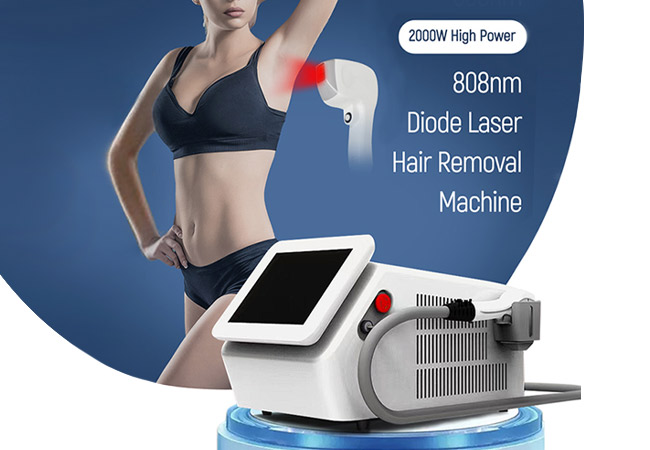
Wavelength configuration: Determines penetration depth and compatibility with different skin phototypes. Common configurations include single-wavelength (e.g., 808 nm) and multi-wavelength systems (e.g., 755/808/1064 nm).
Energy output stability: Fluctuations in fluence can lead to inconsistent results or increased risk of adverse reactions.
Pulse control capability: Adjustable pulse duration and repetition rates allow better adaptation to varying hair thickness and density.
Beam uniformity: Even energy distribution across the treatment spot improves treatment predictability and reduces hot spots.
These parameters directly affect treatment efficiency and safety during prolonged clinical use.
Thermal control is a critical factor in both patient comfort and system longevity. Common cooling technologies include:
Contact cooling (sapphire or metal tips) for direct epidermal protection
Air cooling systems for surface temperature regulation
Liquid cooling circuits for internal thermal stability
In high-duty-cycle environments, inadequate cooling can lead to component degradation, inconsistent output, or forced downtime. Evaluating cooling performance under continuous operation is therefore essential.
From a procurement standpoint, equipment reliability directly impacts total cost of ownership. Key factors include:
Component lifespan and replacement intervals
Ease of maintenance and accessibility of internal modules
Availability of calibration procedures and diagnostic tools
Systems designed for industrial use should maintain performance stability over extended operational periods with minimal manual intervention.
Choosing the right laser hair removal equipment requires a balance between technical capability, operational reliability, and application-specific needs. By evaluating system architecture, energy control, cooling efficiency, and long-term maintainability, procurement and technical teams can make informed decisions that support consistent performance and sustainable operation across professional treatment environments.
Before reviewing technical specifications, it is essential to define the intended application environment. Different operational settings place different demands on equipment performance:
High-frequency treatment environments, such as large beauty clinics or chain operations, require systems designed for continuous operation and stable output.
Low-to-moderate usage facilities may prioritize flexibility, ease of training, and lower maintenance complexity.
Understanding treatment volume, client demographics, and service positioning helps determine whether a device’s technological capabilities align with real operational needs.
From a technical standpoint, the effectiveness of a beauty hair removal device depends on how efficiently it delivers controlled thermal energy to the hair follicle. Key technical factors include:
Energy delivery method: Whether the system uses IPL or laser-based technology influences penetration depth, precision, and consistency.
Energy stability: Fluctuations in output can reduce treatment predictability and increase the risk of skin reactions.
Pulse modulation: Adjustable pulse widths allow operators to adapt to varying hair thickness and skin sensitivity.
Understanding how these parameters interact under continuous operation is essential for assessing long-term performance reliability.
Device architecture directly impacts durability and maintenance requirements. Procurement teams should assess:
Optical system stability, including lens quality and alignment accuracy
Cooling system design, such as contact cooling or integrated liquid circulation
Internal component layout, which affects heat dissipation and service accessibility
Systems engineered for professional use typically maintain stable output under prolonged workloads, reducing unexpected downtime.
Long-term ownership costs are heavily influenced by maintenance requirements and regulatory compatibility. Key evaluation points include:
Preventive maintenance schedules and component replacement cycles
Availability of technical documentation and calibration procedures
Compliance with applicable safety and electrical standards
Equipment that supports predictable maintenance planning helps reduce operational interruptions and supports consistent service delivery.
If you are evaluating or planning to introduce beauty equipment, we recommend considering factors such as technical compatibility, practical application scenarios, and long-term operational stability. Based on different usage scenarios and technical requirements, we can assist you in developing equipment selection strategies and provide more feasible reference information and solutions, helping you establish a more efficient and sustainable match between equipment configuration and business development. Please feel free to contact us for further discussion.
The primary difference lies in energy control, output stability, and system durability. Medical-grade systems typically operate with higher and more stable energy output, tighter pulse control, and advanced cooling mechanisms. Beauty hair removal devices are generally designed for moderate usage intensity, with simplified control logic and lower operational thresholds. From an engineering perspective, medical systems are built for continuous workloads and stricter safety tolerances.
Wavelength directly determines penetration depth and absorption behavior within skin tissue. Shorter wavelengths (e.g., ~755 nm) are effective for lighter skin tones and finer hair, while longer wavelengths (e.g., ~1064 nm) penetrate deeper and are more suitable for darker skin types. Multi-wavelength systems offer operational flexibility but also require more advanced energy management and calibration to maintain consistent output.
Cooling systems are critical for both patient safety and device longevity. Efficient cooling reduces epidermal thermal stress and prevents overheating of internal components. Systems using contact cooling, liquid circulation, or hybrid cooling methods typically show better thermal stability during continuous operation. Poor cooling design can lead to performance degradation, component fatigue, and unplanned downtime.
Long-term performance depends on more than hardware specifications. Key factors include:
Quality of internal components and thermal management
Ease of routine maintenance and calibration
Software reliability and control interface design
Equipment designed for professional use typically maintains consistent performance with minimal manual intervention.


.jpg)
.jpg)