High-Intensity Focused Ultrasound in Aesthetic Medicine: Mechanisms, Clinical Evidence, and Treatment Optimization
2026-08-21
Introduction
High-intensity focused ultrasound (HIFU) has emerged as a leading noninvasive modality for facial rejuvenation and skin tightening, offering benefits including collagen synthesis and subcutaneous fat reduction. Unlike surgical facelifts that require incisions and prolonged recovery, HIFU delivers focused acoustic energy to precise tissue depths beneath the skin surface, generating controlled thermal coagulation zones while preserving epidermal integrity. This article provides a comprehensive examination of HIFU technology—its mechanisms, clinical applications, evidence base, and practical considerations for treatment optimization.
Physical Principles and Mechanism of Action
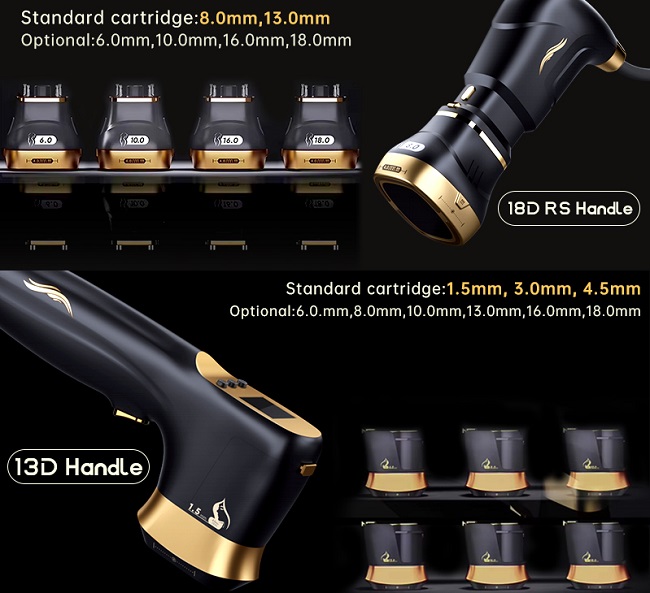
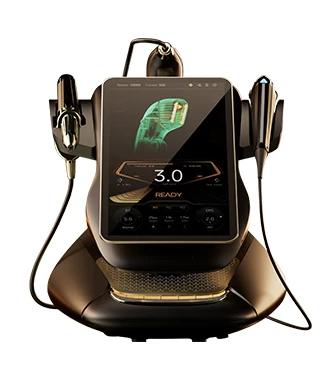
HIFU operates on the principle of focused ultrasound energy delivery. Ultrasound waves are generated by piezoelectric transducers and focused to converge at specific tissue depths—typically 1.5 mm, 3.0 mm, and 4.5 mm beneath the skin surface. At these focal points, the acoustic energy is concentrated, producing localized temperatures ranging from approximately 60°C to 70°C.
This thermal elevation triggers a biphasic tissue response. The immediate effect involves collagen denaturation and contraction—existing collagen fibers in the target tissue undergo conformational change, resulting in immediate tissue tightening. The secondary, longer-term response involves neocollagenesis and elastin synthesis: the controlled thermal injury initiates a wound-healing cascade that activates fibroblasts to produce new collagen and elastic fibers over subsequent weeks to months.
The target depth of HIFU energy determines its clinical effect. Treatment at 1.5 mm primarily addresses the superficial dermis, improving fine lines, skin texture, and pore appearance. The 3.0 mm depth targets the deep dermis, stimulating sustained collagen production and enhancing skin firmness. The 4.5 mm depth reaches the superficial musculoaponeurotic system (SMAS)—the same foundational layer addressed in surgical facelifts—producing mechanical lifting through thermal contraction of this fascial layer. This layered approach enables clinicians to customize treatment according to individual patient anatomy and aesthetic goals.
The transducer frequency influences both penetration depth and energy distribution. HIFU devices utilize cartridges with distinct frequencies; 4 MHz facilitates deeper tissue penetration compared with 7 MHz counterparts. Lower frequencies (2–4 MHz) are typically employed for deeper targets such as the SMAS and subcutaneous fat, while higher frequencies (7–10 MHz) are optimized for more superficial tissue layers. Clinical Applications and Treatment Planning
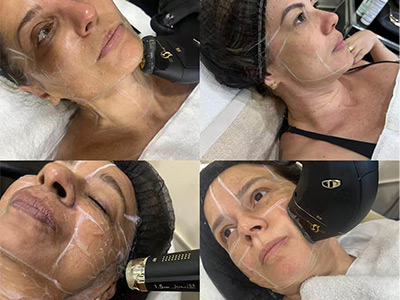
HIFU is FDA-approved for both upper and lower face lifting, neck laxity, and décolleté rejuvenation. Common applications include:
Mid and lower face laxity: HIFU effectively addresses sagging along the jawline and improves lower facial contour. Three-dimensional analysis has demonstrated significant lifting effects, with measurable lift of 2.90 mm in the jowl area and 3.10 mm in the mandible region.
Submental fat reduction and double chin correction: Studies have confirmed that HIFU treatment using 4.5 mm and 6.0 mm focal depth transducers is safe and effective in reducing submental fat. Cervicomental angle improvement of +6.4° and jawline definition index increase of +17.1% have been documented following treatment.
Periorbital and forehead rejuvenation: The forehead can be lifted by 1.24 mm, with crow's feet areas showing lift of 2.25 mm.
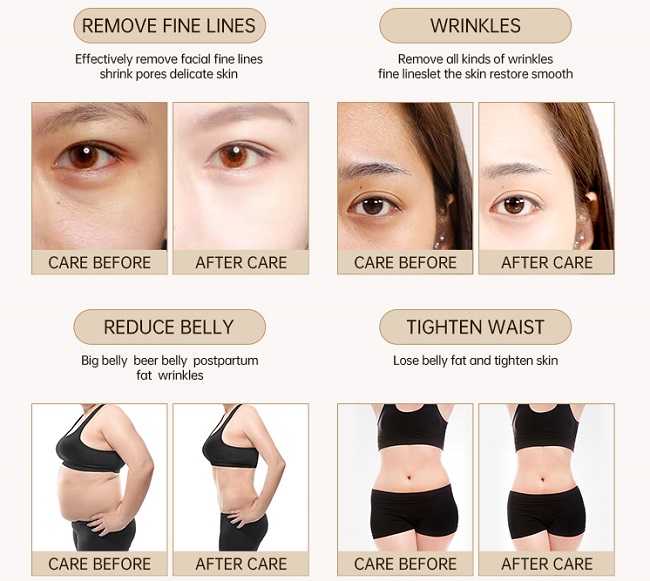
Body applications: Under physician evaluation, HIFU can also be used as an adjunctive treatment for skin laxity on the arms, abdomen, and other body areas.
Clinical Evidence and Outcomes
Recent peer-reviewed literature has substantiated HIFU's clinical efficacy. A 2025 histological and clinical study involving 50 Asian female participants aged 30–60 years with skin laxity demonstrated that HIFU treatment at varying frequencies induced significant histological improvements in collagen and elastin fiber synthesis, along with notable fat reduction. Clinical outcomes corroborated these findings, with 85.3% of participants reporting overall satisfaction and 70.6% noting improvements in facial contouring. Importantly, the study also documented a positive psychological impact, with 64.7% of participants expressing enhanced confidence.
A prospective case series of 38 Korean adults receiving compartment-programmed dual-mode HIFU demonstrated clinically meaningful outcomes at 12-week follow-up. Three-dimensional volumetry showed targeted volume reduction in lateral facial and submental zones—zygomatic–nasolabial volume decreased by 2.4 cm³, central submental volume by 3.3 cm³—while the central perioral–marionette zone showed microaugmentation of 0.7 cm³. 93.7% of participants were rated "improved or better" on the Global Aesthetic Improvement Scale, with mean satisfaction of 4.5 ± 0.4.
Additionally, a three-dimensional analysis of 50 patients treated with HIFU across seven facial aesthetic units confirmed significant lifting effects: posterior cheek (3.38 mm), neck (3.55 mm), mandible (3.10 mm), jowl (2.90 mm), malar region (2.47 mm), crow's feet (2.25 mm), and forehead (1.24 mm).
Treatment Parameters and Optimization
Effective HIFU treatment requires careful parameter selection based on individual patient characteristics. Key variables include:
Depth selection: Matching cartridge depth to tissue anatomy and treatment goals is fundamental. For patients with significant mid-face laxity, 4.5 mm depth targeting the SMAS may be prioritized; for textural concerns, 1.5 mm or 3.0 mm treatments may be more appropriate.
Energy settings: Higher energy levels (0.8–1.2 J) are typically employed for deeper tissue targets such as the SMAS, while lower energy (0.5–0.9 J) may be used for more superficial treatments.
Shot density and pattern: Treatment protocols may utilize either dot mode (for focal microsupport) or linear mode (for broader compaction) depending on the anatomic zone and clinical intent.
Number of sessions: While single-session protocols can produce significant results, optimal outcomes may require multiple sessions. Results typically become apparent within several weeks, with continued enhancements occurring progressively over 3 to 6 months following treatment.
Comparative Considerations: HIFU and Other Modalities
HIFU occupies a distinct position within the non-invasive tightening landscape, differentiated by its depth of action. Whereas radiofrequency (RF) devices primarily heat the dermis, improving skin texture and producing moderate tightening, HIFU's ability to reach the SMAS layer enables more substantial lifting effects in patients with mid- and lower-face laxity. Laser therapies focus more on surface-level texture and tone concerns rather than deep structural laxity. RF microneedling offers both tightening and improvement in pores, acne scars, and skin texture, but requires skin penetration and involves some downtime.
The choice between modalities depends on whether the primary concern is sagging or roughness. For mid-lower face laxity, blurred jawline, or prominent double chin, HIFU is a well-targeted option. When acne scars, enlarged pores, or textural issues are also present, HIFU alone may not be sufficient—combining it with other modalities may be necessary. Safety, Side Effects, and Aftercare
HIFU generally has a short recovery period, with most patients returning to normal activities the same day. Temporary reactions may include mild redness or warmth in the treated area (subsiding within a few hours to a day), slight localized swelling with tenderness, temporary skin sensitivity, and, in rare cases, mild bruising. The precise focal nature of ultrasound energy delivery ensures preservation of epidermal integrity, significantly minimizing the risk of superficial tissue damage.
Post-treatment aftercare recommendations include maintaining consistent sun protection, keeping the treated area moisturized, avoiding high-temperature environments such as saunas and steam rooms in the short term, and following the recommended follow-up schedule to observe results and determine whether further treatment is needed.
Patient Suitability and Expectation Management
Not all patients are ideal candidates for HIFU. The degree of skin laxity, treatment area, and individual expectations determine suitability. The procedure is most effective for mild to moderate skin laxity. Patients with advanced dermal elastosis or significant excess skin may exhibit attenuated responses, necessitating careful patient selection and realistic expectation management. Conclusion HIFU represents a conceptually clear, non-surgical tightening approach with a robust evidence base. Focused ultrasound delivers precise thermal effects to specific depths beneath the skin, stimulating collagen contraction and regeneration. It is a common option for mid- and lower-face laxity, blurred jawline, and double chin contour refinement. The technology is FDA-approved for facial and neck laxity, with clinical studies demonstrating high patient satisfaction (85.3% overall satisfaction) and objective lifting effects quantified by three-dimensional analysis. The duration of lifting effects varies by treatment area, individual skin condition, and overall treatment plan; results typically appear gradually over 2–3 months and may continue to improve thereafter.
Whether HIFU is suitable, how many sessions are recommended, the interval between sessions, and whether combining with other modalities is necessary—all of these should be based on a professional physician's assessment of the patient's skin condition and treatment goals.



.jpg)