FAQ
Blog&News

AI Skin Analyzer Machine: The Complete 2026 Guide to Smart Skincare Diagnostics

2026-06-26
Introduction
The beauty industry has entered a new era where data drives decisions. Gone are the days when skincare professionals relied solely on visual inspection and client questionnaires. Today, the AI skin analyzer machine has become an indispensable tool for clinics, salons, and skincare professionals who want to deliver personalized, results-driven treatments.
But what exactly is a skin analyzer, and why has it become essential in modern skincare? This comprehensive guide explores everything you need to know about skin analysis machines — from how they work and what they detect, to why they're transforming the beauty industry in 2026.
Whether you're a clinic owner looking to upgrade your diagnostic capabilities, a distributor seeking high-demand products, or a beauty professional wanting to offer cutting-edge consultations, understanding skin analysis technology is the first step toward better client outcomes and business growth.

Market Growth: The Booming Skin Analyzer Industry in 2026
The numbers tell a compelling story. The AI skin analysis instruments market has grown rapidly in recent years, expanding from $2.14 billion in 2025 to an estimated $2.54 billion in 2026 — a compound annual growth rate (CAGR) of 18.8%. More broadly, the AI Skin Analysis Market is valued at USD 2.13 billion in 2026 and is projected to reach USD 6.30 billion by 2033, growing at a CAGR of 16.8%.
The skin analysis systems market is also seeing strong growth, projected to rise from $1.65 billion in 2025 to $1.81 billion in 2026 at a CAGR of 9.7%. Meanwhile, the AI facial skin analyzer market alone is expected to grow from $0.81 billion in 2025 to $1.35 billion by 2030.
What's driving this explosive growth? Major trends include the increasing adoption of AI-driven skin diagnostics, rising integration of mobile-based skin analysis platforms, growing use of 3D facial imaging technologies, expansion of personalized skincare recommendation systems, and enhanced accuracy in multi‑parameter skin assessment.
The global complexion analysis systems market is also expanding, valued at USD 1.76 billion in 2025 and projected to reach USD 4.02 billion by 2032 at a CAGR of 12.52%.

What Is a Skin Analyzer Machine?
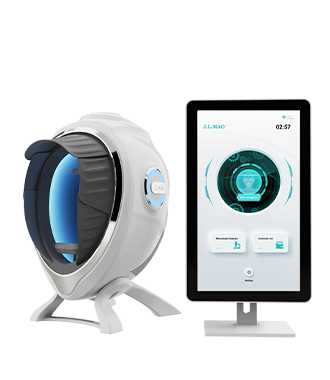
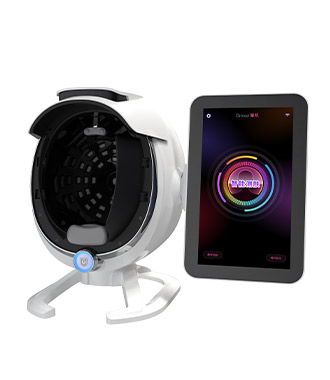
skin analyzer machine is an advanced diagnostic device that evaluates skin conditions using high-resolution imaging, specialized lighting technologies, and artificial intelligence algorithms. Unlike traditional methods that rely on subjective observation, a digital skin analysis device provides objective, quantifiable data about skin health.
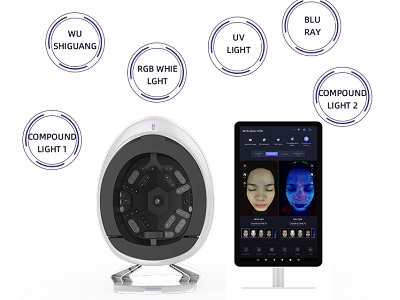
Modern skin scanner analyzers capture images of the face under different light spectrums — including RGB, UV, and polarized light — and process them using AI algorithms to generate comprehensive skin health reports. These reports form the foundation for personalized treatment recommendations and product selections.
Key technologies used in professional skin analyzers include:
  • RGB imaging: Captures visible skin tone and surface texture
  • UV light analysis: Reveals hidden sun damage, pigmentation, and bacterial presence
  • Polarized light imaging: Penetrates surface reflections to analyze deeper pigmentation and vascular conditions
  • Cross‑polarized and parallel‑polarized systems: Provide clearer visualization of subsurface skin conditions
Recent breakthroughs in deep learning architectures have fundamentally altered how facial skin analyzers interpret complex dermal patterns, enabling devices to recognize subtle pigmentation anomalies and microstructural changes with unprecedented accuracy. Integration of near-infrared and visible light emitting diodes has further enhanced the precision of hydration and sebum measurements, while ultraviolet technology continues to reveal early signs of photoaging.

How Does an AI Skin Analyzer Work?
Understanding how a skin analyzer machine works involves breaking it down into three core components: image capture, data processing, and diagnostic output.
1. Image Capture with Multi‑Spectrum Technology
High-definition cameras capture facial images from multiple angles using different types of light:
  • RGB light reveals visible skin tone and surface texture
  • UV light detects sun damage, oil secretion, and clogged pores
  • Polarized light analyzes deeper pigmentation and vascular conditions
Advanced models like the AIMYSKIN NEO-X feature a 12MP industrial‑grade high‑definition camera capable of penetrating up to 3mm beneath the skin surface, capturing data that traditional devices simply cannot see.
2. AI-Powered Data Processing
Once facial images are captured, advanced AI algorithms process the visuals to assess various skin metrics. These include:
  • Skin moisture analysis for hydration levels
  • Pore size and sebum levels for acne analysis
  • Pigmentation depth and distribution
  • Wrinkle depth and skin elasticity
  • Age estimation through skin texture patterns
The AI compares the user's data with an extensive database of skin profiles, creating a benchmark for accurate diagnosis. Modern AI skin analysis devices are designed to learn and adapt over time, improving accuracy with each scan. Advances in imaging sensors and data algorithms have enabled devices to quantify hydration levels through natural moisturizing factor measurements and trans epidermal water loss metrics while simultaneously assessing sebum distribution.
3. Diagnostic Output and Recommendations
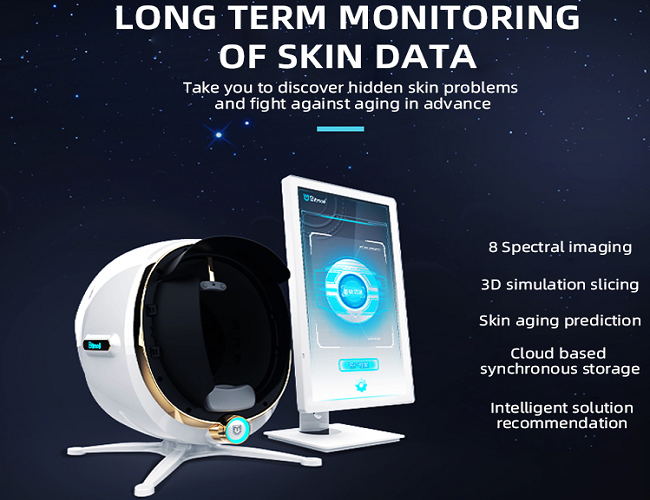
The final output is a detailed visual and numerical skin report highlighting problem areas, providing numerical scores for each condition, and suggesting tailored skincare routines or treatments. Many facial analysis machines now integrate with companion apps, allowing professionals to store client data and track progress over time.
DIBI Milano's recent skin analyzer system, for example, incorporates a dermoscanner with five‑megapixel cameras capable of capturing high‑definition images at up to 20 times magnification, enabling detailed skin imaging and three‑dimensional skin analysis with integrated visual comparison across seven skin parameters.

What Can a Skin Analyzer Detect?
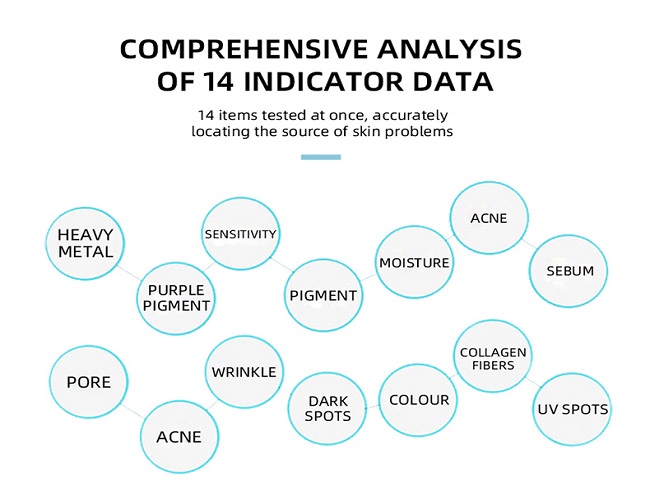
A professional skin scanner analyzer can detect and analyze a wide range of skin conditions, including:
Skin Indicator What It Reveals
Moisture levels Hydration and dehydration patterns
Oil balance Sebum production analysis
Pigmentation Dark spots, freckles, UV damage, melasma
Pores Enlarged pore visualization and clogging
Fine lines & wrinkles Early aging signs and depth analysis
Sensitivity Capillary and barrier health
Hidden inflammation Under‑the‑surface irritation
Acne risk Deep oil blockage detection
Collagen loss Early indicators of elasticity decline
Skin barrier health Overall protective function assessment
Advanced models like the AIMYSKIN NEO-X AI Skin Imaging Analyzer can accurately detect and analyze more than 30 core skin indicators in a single scan, including skin moisture, oil balance, pigmentation, pores, fine lines, skin sensitivity, and hidden inflammation. The device can identify hidden inflammation beneath smooth‑looking skin, early collagen loss behind fine dehydration lines, and potential pigmentation development before it becomes visible.
Clarins' recently launched AI Skin Observer, taking the form of a mirror, uses biophysical sensors and face pictures with multiple lighting modes to analyze up to 22 skin parameters.

Why Skin Analyzers Are Essential in 2026
The skincare industry is undergoing a profound transformation, shifting from a one‑size‑fits‑all approach to hyper‑personalization and scientific precision. Here's why skin analyzers have become indispensable:
1. Data‑Driven Consultations Build Trust
Clients are more likely to trust recommendations backed by objective data. A facial scanner skin analyzer provides visual evidence of skin concerns, making consultations more educational and engaging. When clients can see their UV damage or hidden pigmentation on screen, they understand why specific treatments or products are recommended.
2. Early Detection of Hidden Issues
Many skin problems develop beneath the surface before becoming visible. UV damage, for example, can lead to pigmentation that only appears years later. A skin diagnosis machine with UV light analysis can detect this damage early, enabling preventive measures.
3. Track Progress and Demonstrate Results
Are your skincare products and treatments actually working? A skin analyzer machine allows practitioners to track changes over time with before‑and‑after comparisons, providing objective evidence of treatment effectiveness.
4. Increase Treatment Conversion Rates
By showing clients a visual of their skin concerns, professionals can more easily upsell treatments or products that directly address those issues.
5. Competitive Advantage for Clinics
Clinics that offer advanced skin analysis stand out from competitors who rely on subjective assessments. Technology‑augmented consultations produce better‑informed patients, stronger clinical trust, and more defensible outcomes.
6. Addressing the Growing Burden of Skin Disorders
The increasing prevalence of skin disorders, including acne and hyperpigmentation, is driving demand for AI skin analysis instruments. In September 2024, the Journal of the American Academy of Dermatology reported that approximately 15% of a surveyed population of 7,126 experienced post‑inflammatory hyperpigmentation (PIH), predominantly women (56%) with a mean age of 39 years. Additionally, 71% of individuals with PIH reported a history of acne, and 85% believed that earlier acne treatment could have prevented it.

Key Features to Look for in a Skin Analyzer (2026)
When evaluating a skin scanner analyzer for your clinic or business, consider these essential features:
High‑Resolution Multi‑Spectrum Imaging
The cornerstone of any professional facial scanner skin analyzer is its imaging technology. Look for devices that offer:
  • RGB photography for surface‑level visualization
  • UV light spectrum analysis for sun damage detection
  • Polarized light imaging for subsurface analysis
  • Cross‑polarized or parallel‑polarized systems for clearer visualization
AI‑Powered Analysis with Deep Learning
AI skin analysis is the backbone of modern diagnostic devices. Recent breakthroughs in deep learning architectures have fundamentally altered how facial skin analyzers interpret complex dermal patterns, enabling devices to recognize subtle pigmentation anomalies and microstructural changes with unprecedented accuracy.
Portability and Usability
For mobile professionals, a portable skin analysis machine that doesn't compromise on accuracy is essential. Modular hardware designs are facilitating portable, smartphone‑based attachments, empowering consumers and clinicians to conduct high‑fidelity skin assessments outside traditional laboratory settings.
Comprehensive Reporting
The best skin analyzers generate detailed visual and numerical reports with scores for each skin condition, and suggest tailored skincare routines or treatments.
Cloud Integration and Data Storage
Modern skin analyzer devices increasingly offer cloud connectivity for digital reports and remote consultations, enhancing client experience and accessibility.
Multi‑Parameter Assessment
The most advanced 2026 devices can assess up to 30+ skin parameters in a single scan, moving far beyond the 5‑7 parameters that were standard just a few years ago.

Skin Analyzer Price: What to Expect in 2026
The skin analyzer price varies significantly depending on functionality, AI capabilities, and imaging quality:
Category Price Range (USD)
Entry‑level portable skin analyzer $300 – $800
Mid‑range AI skin analyzer $1,200 – $3,500
High‑end spectral imaging analyzer $4,000 – $8,000
Premium clinical‑grade systems $8,000 – $15,000+
While the upfront cost may seem substantial, the ROI for professionals is significant. These devices improve treatment accuracy, enhance client satisfaction, and increase retention — making them a strategic investment rather than just an expense. Pricing tiers spanning entry economy to ultra‑premium segments reflect a market commitment to inclusivity without compromising analytical rigor.

Skin Analyzer Applications in the Beauty Industry
Skin analysis machines have diverse applications across the beauty industry:
Dermatology Clinics
  • Pre‑treatment assessment and diagnosis
  • Treatment planning and monitoring
  • Documenting progress and outcomes
  • Early detection of skin conditions
Aesthetic Salons and Med Spas
  • Client consultations and education
  • Product recommendations and upsells
  • Building trust through visual diagnostics
Mobile Beauty Services
  • Portable devices enable on‑the‑go consultations
  • Professional‑grade analysis at client locations
Skincare Retail
  • Helping customers understand their skin needs
  • Recommending appropriate products based on data
  • Increasing average transaction values
Telemedicine and Remote Consultations
  • The increasing propensity for teledermatology consultations has driven interest in remote monitoring capabilities

The Future of Skin Analysis: 2026 and Beyond
AI is the backbone of modern skin analyzer machines. As machine learning improves, we can expect several advancements:
  • Ethnic‑specific skin analysis algorithms for more accurate diverse skin type assessment
  • Real‑time skin aging prediction to forecast future skin conditions
  • Integration with personalized skincare formulation systems
  • Remote consultations via tele‑dermatology platforms
  • Voice‑controlled skin analyzer apps
  • AI and augmented reality (AR)‑powered skin analyzers delivering real‑time, personalized skincare assessments
By 2026, the primary trend is the seamless integration of Artificial Intelligence and Machine Learning with multi‑spectral imaging. Modern skin analyzers are no longer limited to surface‑level observations — they now utilize high‑resolution cameras, UV light, cross‑polarized light, and advanced imaging technologies to capture subsurface data.
Major companies are focusing on developing innovative solutions, such as AI‑ and AR‑powered skin analyzers, to enhance user engagement and increase accessibility across both consumer and professional segments. For example, in June 2024, Face Haus Inc. partnered with Perfect Corp. to introduce an AI‑powered skin analysis solution for its clients, enhancing the skincare consultation process with fast, detailed assessments and personalized recommendations.

AIMYSKIN: Leading the Way in Intelligent Skincare Diagnostics
When it comes to AI skin analysis devices, AIMYSKIN — a high‑tech brand under Xuanzun (Hebei) Medical Technology Co., Ltd. — has established itself as a trusted name in 2026.
With over 10 years of R&D experience and a full line of certified products, AIMYSKIN offers a wide range of skin analyzer machines designed for professional use. Their devices combine advanced skin analysis with digital features, including:
  • Five‑spectrum imaging (RGB, UV, polarized, fluorescence, and more)
  • AI‑powered software that interprets data and suggests tailored skincare recommendations
  • Skin pigmentation analysis using UV light to reveal hidden sun damage
  • Portable options for mobile professionals
  • User‑friendly interfaces with large touchscreens
Popular AIMYSKIN Models (2026)
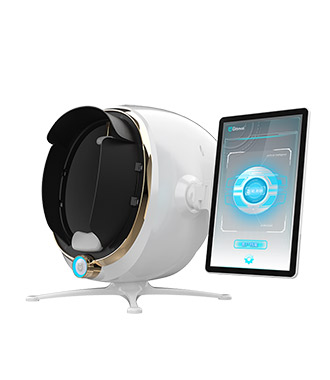
AIMYSKIN NEO‑X AI Skin Imaging Analyzer: The flagship 2026 model features a 12MP industrial‑grade high‑definition camera capable of penetrating up to 3mm beneath the skin surface, detecting and analyzing more than 30 core skin indicators including skin moisture, oil balance, pigmentation, pores, fine lines, skin sensitivity, and hidden inflammation.
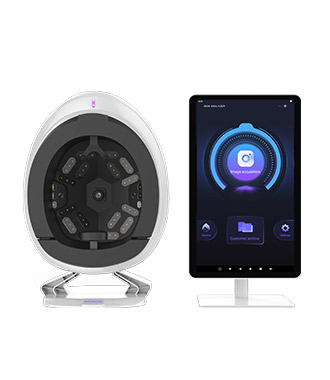
AM‑211 Android‑Based Skin Analyzer: Features a large touchscreen interface and combines five‑spectrum imaging to provide comprehensive digital skin analysis.
AM‑213 High‑End Dermatology Analyzer: Designed for high‑precision clinics with advanced imaging capabilities.
Radiant DX: Equipped with 5‑spectrum imaging plus SLR camera for commercial use.
AM‑G803 Magic Mirror: Mobile consultant model with convenient portability.
AM‑216 Portable Skin & Scalp Analyzer: Compact device ideal for mobile professionals, excelling at skin moisture analysis, pigmentation analysis, and skin age analysis.
AIMYSKIN's devices are designed to identify hidden skin concerns invisible to the naked eye, helping skincare professionals create truly personalized skincare solutions.

Frequently Asked Questions (2026)
Q1: What is a skin analyzer machine and how does it work?
A: A skin analyzer machine is a diagnostic device that uses high‑resolution imaging, specialized lighting (RGB, UV, polarized), and AI algorithms to evaluate skin conditions and generate comprehensive skin health reports.
Q2: Can I use a skin analyzer at home?
A: Yes, portable and mobile skin analyzer models are available for personal use. However, professional devices provide more comprehensive analysis with deeper subsurface imaging.
Q3: How accurate is AI skin analysis in 2026?
A: Very accurate. Recent breakthroughs in deep learning architectures have enabled devices to recognize subtle pigmentation anomalies and microstructural changes with unprecedented accuracy.
Q4: What is the difference between a skin scanner and a skin analyzer?
A: A skin scanner captures the image, while the skin analyzer processes the data using AI to provide diagnostic results and recommendations. The analyzer adds intelligence to the imaging.
Q5: How much does a professional skin analyzer cost in 2026?
A: Professional skin analyzer prices range from $300 for portable models to over $8,000 for high‑end devices with advanced imaging and AI capabilities.
Q6: What skin problems can a skin analyzer detect?
A: Advanced 2026 models can detect 30+ indicators including acne, enlarged pores, pigmentation, wrinkles, texture irregularities, hydration levels, sebum production, UV damage, skin sensitivity, collagen loss, and hidden inflammation.
Q7: Can a skin analyzer be integrated with other beauty devices?
A: Yes, modern skin analyzers are designed to work alongside advanced skin rejuvenation technologies like lasers, RF, and HIFU machines for optimal treatment planning.
Q8: Is there a difference between a facial analysis machine and a skin diagnosis machine?
A: They are often used interchangeably. However, a facial analysis machine typically emphasizes facial imaging, while a skin diagnosis machine may include broader features like scalp analysis.

Conclusion: Invest in the Future of Skincare
A skin analyzer machine is more than just a diagnostic tool — it's a strategic asset for anyone in the skincare industry. Whether you're looking to improve treatment accuracy, increase client trust, or offer cutting‑edge consultations, an AI skin analysis device delivers the technology and support you need.
The global skincare market continues to grow, with the AI skin analysis market projected to reach USD 6.30 billion by 2033. The demand for data‑driven, personalized skincare solutions is higher than ever. By investing in advanced skin analysis technology, professionals can position themselves at the forefront of this evolving industry.
From skin age analysis to acne pore analysis, from UV damage detection to hydration assessment, there's never been a better time to embrace the power of AI‑powered skin diagnostic tools and revolutionize the way you care for your clients' skin.


Ready to Take Your Clinic or Business to the Next Level?
If you are a clinic owner, med spa operator, dermatologist, or beauty equipment distributor looking to upgrade your diagnostic capabilities with cutting-edge AI skin analyzer technology, we are here to help.
At AIMYSKIN, we offer a full range of professional AI skin analyzer machines designed to meet the needs of modern skincare professionals. Whether you need:
  • A portable model for mobile consultations
  • A high-end multi‑spectral device for clinical precision
  • Custom branding and OEM solutions for distributors
We provide factory-direct pricing, technical training, after-sales support, and fast worldwide shipping.
Contact us today on Whatsapp: +86 19937136112
Our team is ready to answer your questions, provide product recommendations, and offer a customized quote based on your business needs. Let us help you bring smart skin diagnostics to your market.

 
More news
How can we help?
Get in touch with us today for any service. We will reply you within 2 hours