FAQ
Blog&News

Pico Laser Treatment for Pigmented Lesions: A Complete Clinical Guide for Practitioners

2026-06-18
Summary
Pigmented lesions are skin conditions caused by abnormal pigment deposition resulting from congenital genetic defects, acquired environmental factors, or skin aging. These lesions present with diverse clinical manifestations, including freckles, lentigines, nevi, and café‑au‑lait spots.
For practitioners and clinic owners looking to expand their aesthetic service offerings, understanding how to properly set treatment parameters when using Pico lasers for different types of pigmented lesions is essential for achieving optimal clinical outcomes while minimizing adverse effects. This guide provides detailed, evidence‑based protocols for treating four common types of pigmented lesions with picosecond laser technology.

1. Pico Laser Technology: Mechanism of Action
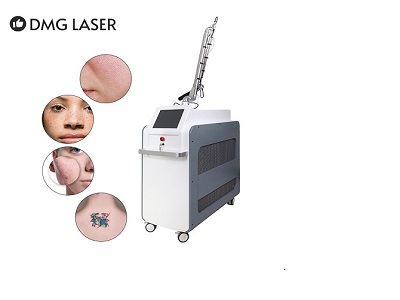
Picosecond lasers are defined as lasers with output pulse widths in the picosecond range (typically 300–750 ps), also known as sub‑nanosecond lasers. Common wavelengths include 532nm, 730nm, 755nm, 785nm, and 1064nm.
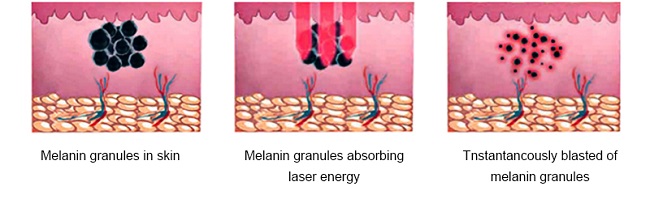
Due to their extremely short pulse durations, picosecond lasers can achieve exceptionally high peak power instantaneously, generating a photoacoustic (photomechanical) effect on target chromophores. This effect pulverizes melanin particles into much smaller fragments compared to traditional Q‑switched nanosecond lasers, making them easier for macrophages and other phagocytic cells to clear, while producing a milder inflammatory response.
Key advantages of picosecond over Q‑switched nanosecond lasers include:
  • Superior clearance rates for pigmented lesions and tattoos
  • Fewer treatment sessions required
  • Lower risk of post‑inflammatory hyperpigmentation (PIH)
  • Broader applicability across Fitzpatrick skin types
  • Additional cosmetic benefits including improved skin texture and pore refinement
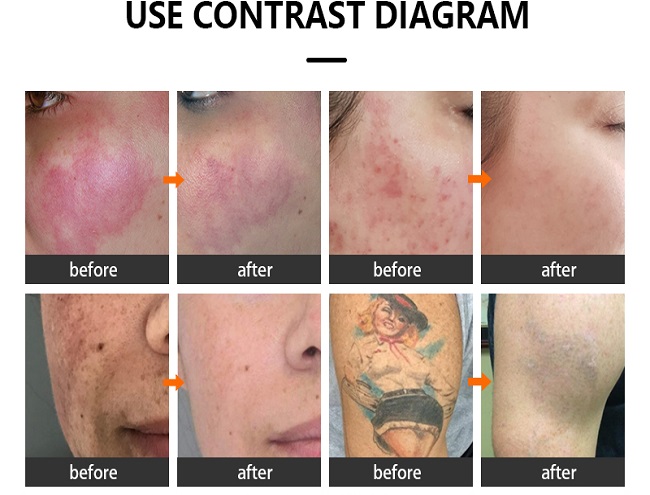
According to the Expert Consensus on the Clinical Application of Picosecond Lasers, picosecond lasers can be used to treat various epidermal and dermal pigmented lesions. The technology has ideal efficacy for freckles, solar lentigines, and nevus of Ota; is effective for café‑au‑lait spots and lentigines (though with some recurrence risk); and can serve as a treatment option for more challenging conditions.


2. Treatment Parameter Selection: Core Principles

Before examining specific lesion types, practitioners should understand several foundational principles that apply across all pigmented lesion treatments:
2.1 Wavelength Selection by Lesion Depth
Lesion Depth Recommended Wavelengths Mechanism
Epidermal (freckles, solar lentigines, café‑au‑lait spots) 532nm, 755nm Shallow penetration targets superficial melanin
Mixed epidermal‑dermal (melasma, some nevi) 755nm, 1064nm Moderate penetration addresses pigment at multiple depths
Dermal (nevus of Ota, Hori’s nevus) 755nm, 1064nm Deep penetration reaches dermal melanocytes
2.2 Endpoint Reactions
The clinical endpoint varies by lesion type and treatment approach:
  • Epidermal lesions (freckles, lentigines): Mild white frosting (immediate whitening)
  • Dermal lesions (nevus of Ota): Moderate frost with no tissue splatter (higher energy) or erythema without petechiae (lower energy)
  • Melasma: Mild erythema (gentle, conservative approach)
2.3 Fitzpatrick Skin Type Considerations
Picosecond lasers can be used across a broader range of skin types than nanosecond lasers due to the reduced risk of hyper‑ or hypopigmentation associated with photoacoustic (vs. photothermal) effects. However, special considerations apply for skin of color (Fitzpatrick IV–VI):
  • Increased epidermal melanin content adds risk for pigmentary complications
  • Conservative settings (lower fluence, larger spot size) are recommended
  • Test patching is strongly advised
  • Treatment intervals should be extended to allow complete healing


3. Treatment Protocols by Lesion Type

3.1 Freckles (Ephélides)
Freckles are the most common epidermal pigmentation disorder encountered in clinical practice.
Wavelength Options:
  • 532nm is commonly used for freckle treatment
  • 755nm shows higher lesion clearance and satisfaction rates
  • 730nm demonstrates excellent selectivity for pigment with minimal damage to the dermal‑epidermal junction
Recommended Parameters:
Device/Wavelength Energy Density Spot Size Endpoint
755nm (Picosure) 4.07 J/cm² 2.5 mm Immediate whitening
730nm (Picoway) 1.4–1.7 J/cm² 3 mm Mild frosting
532nm (Picoway) Determined by skin type & presentation Variable Mild frosting
Treatment Tips:
  • Best results in Fitzpatrick III–IV with clearly demarcated lesions
  • Patients with lighter lesions or concurrent melasma have higher PIH risk
  • One session may achieve significant clearance; 1–3 sessions typically recommended
  • Treatment interval: 4–6 weeks
3.2 Solar Lentigines (Age Spots, Sunspots)
Solar lentigines are benign lesions occurring on sun‑exposed areas, particularly the face and backs of hands, increasing with age.
Wavelength Options:
  • 532nm targets superficial pigment effectively
  • 755nm provides excellent clearance with low PIH risk
  • 730nm and 785nm are also effective
Recommended Parameters:
Device/Wavelength Energy Density Spot Size Endpoint
532nm 0.6–1.4 J/cm² 3–6 mm Mild frosting
755nm 4.07 J/cm² 2.5–3 mm Immediate whitening
Treatment Tips:
  • One or two sessions can completely remove benign, flat lesions
  • 50% lesion clearance achieved after two treatments across Fitzpatrick II–V
  • Treatment interval: 4–6 weeks
  • Excellent prognosis with low recurrence when sun protection is maintained
3.3 Café‑au‑Lait Macules (CALMs)
Café‑au‑lait macules are pigmented lesions often referred to as “coffee with milk” due to their light brown coloration. They are present at birth, more commonly called birthmarks, and remain throughout life.
Epidemiology:
  • Present in approximately 5% of Caucasians and up to 15% of Americans of African descent at birth
  • Can be treated across Fitzpatrick skin types I–IV
Wavelength Options:
  • 532nm: For lighter, more superficial lesions
  • 755nm: Effective alternative
  • 1064nm: For deeper lesions
Recommended Parameters:
  • Parameters should be based on skin type and lesion color
  • Endpoint: Mild white frosting
Treatment Tips:
  • Efficacy varies; some patients show significant improvement while others have higher recurrence rates
  • May require multiple sessions (1–6+)
  • Treatment interval: 4–8 weeks
  • Pediatric patients may respond differently than adults
3.4 Nevus of Ota (and Hori’s Nevus / Acquired Bilateral Nevus of Ota‑like Macules)
Nevus of Ota is a dermal melanocytic condition characterized by blue‑gray pigmentation in the distribution of the ophthalmic and maxillary branches of the trigeminal nerve. Hori’s nevus (ABNOM) is a relatively common skin disorder often misdiagnosed as melasma.
Wavelength Options:
  • 755nm is highlighted for its efficacy in Hori’s nevus
  • 1064nm provides deep penetration for dermal melanocytes
  • 730nm is also effective for dermal pigmentation
Recommended Parameters:
Approach Spot Size Energy Density Endpoint
High Energy 2.5–3 mm 2.83–4.07 J/cm² Moderate frost, no tissue splatter
Low Energy 4.5–5 mm 1.02–1.26 J/cm² Erythema, no petechiae
Treatment Tips:
  • Treatment interval: 3–6 months
  • Generally requires multiple sessions to achieve clearance
  • Pediatric patients (nevus of Ota) typically require fewer sessions to achieve clearance than adults
  • Picosecond alexandrite laser shows higher single‑session clearance rates than Q‑switched nanosecond lasers
  • Higher PIH risk in Hori’s nevus; extend treatment intervals accordingly
  • 755nm picosecond laser is safe and effective for treating nevus of Ota in children


4. General Treatment Guidelines

4.1 Pre‑Treatment Assessment
  • Evaluate Fitzpatrick skin type
  • Assess lesion color, depth, and borders
  • Document with standardized photography
  • Review patient history for photosensitizing medications, melasma, and PIH history
  • Consider test patching for darker skin types or uncertain responses
4.2 During Treatment
  • Apply appropriate eye protection for patient and operator
  • Use dynamic cooling or contact cooling to protect epidermis
  • Observe endpoint reactions carefully
  • Avoid overlapping pulses excessively
  • For dermal lesions, consider using larger spot sizes to minimize epidermal heating
4.3 Post‑Treatment Care
  • Apply cooling or soothing agents immediately
  • Strict sun protection (SPF 50+) for at least 4–6 weeks
  • Avoid exfoliants and irritating skincare products for 1 week
  • Schedule follow‑up at 4–8 weeks to assess response
  • Monitor for PIH, especially in Fitzpatrick III–VI
4.4 Common Adverse Effects and Management
Adverse Effect Prevention Management
Post‑inflammatory hyperpigmentation (PIH) Conservative parameters, test patching, sun avoidance Topical tyrosinase inhibitors, sun protection, extended intervals
Erythema/edema Proper cooling, appropriate fluence Usually self‑limiting; resolves within hours to days
Hypopigmentation Avoid overly aggressive treatment in darker skin May be transient or permanent; prevention is key


5. Key Takeaways for Clinic Owners

5.1 Why Offer Pico Laser Pigment Treatments?
  1. High demand: Pigmented lesions are among the most common patient concerns
  2. Excellent outcomes: Picosecond lasers provide superior clearance with fewer sessions
  3. Low adverse event profile: Reduced PIH risk compared to nanosecond lasers
  4. Versatility: One platform treats epidermal, dermal, and mixed lesions
  5. Recurring revenue: Multiple sessions required for optimal results
5.2 Equipment Considerations
  • Ensure your Pico laser platform offers multiple wavelengths (at minimum 532nm and 1064nm, ideally with 755nm and 730nm options)
  • Verify FDA 510(k) clearance or CE marking for pigmented lesion indications
  • Consider platforms with adjustable spot sizes and energy density ranges suitable for diverse lesion types
  • Integrated cooling systems are essential for patient comfort and safety
5.3 Treatment Pricing Reference
Lesion Type Typical Sessions Price Range (Per Session, USD)
Freckles 1–3 $200–400
Solar lentigines 1–2 $250–500
Café‑au‑lait macules 3–6+ $300–600
Nevus of Ota / Hori’s 5–10+ $400–800

References
  1. Expert Consensus on the Clinical Application of Picosecond Lasers
  2. Guideline for the Diagnosis and Treatment in Laser and Aesthetic Medicine (2024)
  3. Treatment Guidelines for the PicoWay® Laser System in Skin of Color
  4. Picosecond Laser Treatment for Tattoos and Benign Cutaneous Pigmented Lesions
  5. Wavelength‑dependent threshold fluences for melanosome disruption (PubMed, 2024)
  6. A Prospective, Split‑Face, Randomized Study Comparing Picosecond to Q‑Switched Nd:YAG Laser for Treatment of Epidermal and Dermal Pigmented Lesions in Asians
More news
How can we help?
Get in touch with us today for any service. We will reply you within 2 hours