High-Intensity Focused Ultrasound for Facial Rejuvenation: Mechanisms, Clinical Outcomes, and Patient Selection
2026-09-04
Introduction
High-intensity focused ultrasound (HIFU) has emerged as a prominent non-invasive modality for facial rejuvenation, offering a middle ground between topical skincare and surgical intervention. The procedure delivers focused acoustic energy to precise depths beneath the skin, generating thermal coagulation points that trigger a wound-healing response without disrupting the epidermal surface. Unlike ablative lasers or surgical lifts, HIFU leaves the outer skin layer intact, which accounts for its minimal downtime and low complication profile. Mechanism of Action: The Biology of Thermal Coagulation
The therapeutic effect of HIFU is rooted in the biological response to controlled thermal injury. When focused ultrasound energy converges at a specific tissue depth, it elevates local temperatures to approximately 60–70°C. This thermal load produces discrete microcoagulation zones—small columns of thermally modified tissue that trigger a cascade of regenerative events.
The body interprets these micro-injuries as tissue damage requiring repair. Fibroblasts are activated, and the synthesis of new collagen and elastic fibers begins. This process, known as neocollagenesis, unfolds over several weeks to months. HIFU has demonstrated the highest level of neocollagenesis in the deep reticular dermis when compared to other non-invasive modalities. The newly formed collagen gradually tightens and lifts the treated tissue, producing a natural, progressive improvement that becomes increasingly apparent over time.
Histological evidence confirms that HIFU increases both collagen and elastin fiber synthesis while also contributing to subcutaneous fat reduction. A recent histological analysis of pig skin treated with HIFU at varying depths (2.0, 3.0, 4.5, and 6.0 mm) revealed increased collagen types I and III, enhanced elastin fiber synthesis, and significant fat reduction post-treatment.
Depth of Action and Layer-Specific Effects
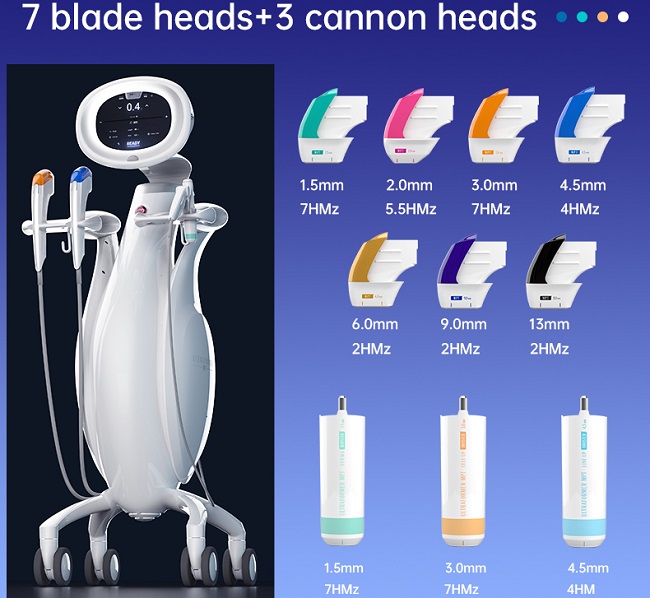
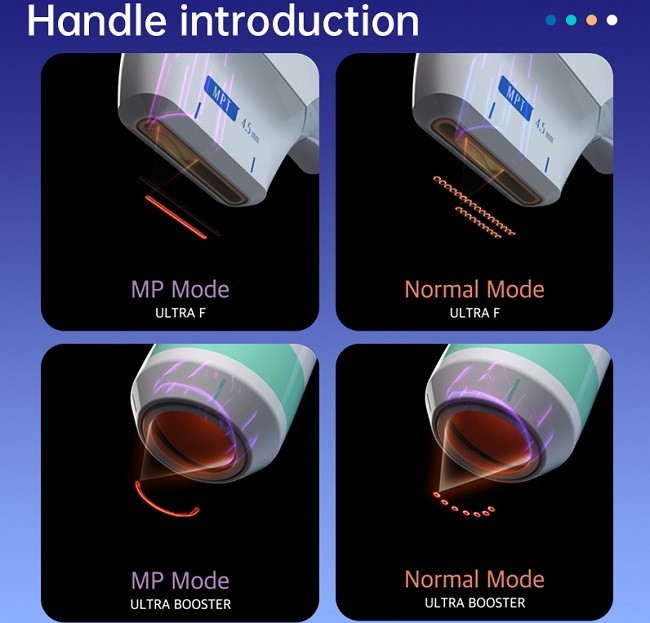
The versatility of HIFU lies in its capacity to target multiple tissue layers through interchangeable transducers. Clinical practice commonly employs depths of 1.5 mm, 3.0 mm, and 4.5 mm, with larger transducers (6 mm and above) reserved for body contouring applications.
The 1.5 mm transducer primarily affects the superficial dermis, making it suitable for fine lines and textural refinement. The 3.0 mm transducer reaches the deep dermis, where the bulk of collagen remodeling occurs. The 4.5 mm transducer targets the superficial musculoaponeurotic system (SMAS)—the same fascial layer addressed in surgical facelifts. Thermal coagulation at this depth produces a lifting effect by contracting the fibro-septal network and reinforcing attenuated retaining ligaments.
Recent innovations have extended the treatment envelope. Studies have documented the safe application of 6 mm transducers in facial rejuvenation, particularly on the temporal region where skin and subcutaneous fat are relatively thick. In one study, a 6 mm transducer was applied to the posterior temporal lobes without reports of epilation, as the mean depth of scalp hair follicles (approximately 3.86–4.16 mm) lies above the treatment zone.
Clinical Evidence and Efficacy
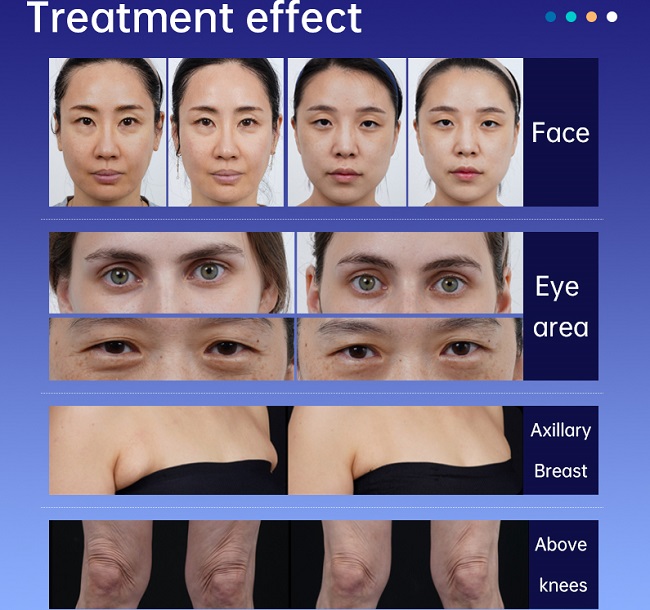
The clinical literature consistently supports the efficacy of HIFU for skin tightening and facial lifting. A prospective study involving 50 Asian female participants aged 30–60 years with skin laxity reported that 85.3% of participants expressed overall satisfaction, with 70.6% noting improvements in facial contouring. Self-esteem assessments further revealed that 64.7% of participants experienced enhanced confidence following treatment.
A retrospective clinical study of 20 patients receiving HIFU monotherapy demonstrated significant wrinkle improvement, as measured by an automatic skin analysis system. Another study evaluating HIFU treatment across seven facial areas confirmed its safety and efficacy, noting particular effectiveness in the jawline, cheek, and perioral regions.
The 2-line HIFU technique has also shown promise. A study assessing this approach in a Korean population reported a significant reduction in mean skin grade from 17 at baseline to 14 at posttreatment (p < 0.01), indicating meaningful improvement in wrinkling and sagging.
A 2025 histological and clinical study further corroborated these findings, demonstrating that HIFU treatment at varying frequencies induced significant histological improvements in collagen and elastin fiber synthesis alongside notable fat reduction, with clinical outcomes confirming 85.3% overall satisfaction and 70.6% improvement in facial contouring.
Safety Profile and Adverse Events
The safety profile of HIFU is favorable, with most adverse events being mild and transient. Commonly reported side effects include temporary erythema, edema, and mild discomfort. These typically resolve within hours to days without intervention.
However, rare but significant complications have been documented. A systematic review of HIFU complications identified fat atrophy, nerve irritation, and hyperpigmentation as potential adverse events associated with improper device settings, inadequate practitioner expertise, or insufficient patient assessment. Serious events such as neuromuscular dysfunction and scarring, while rare, underscore the importance of operator training and adherence to standardized protocols.
Proper patient selection is essential. Contraindications include active skin infection or inflammation, severe cystic acne, pregnancy, and breastfeeding. Patients with extensive skin laxity, marked tissue heaviness, obesity, or advanced photoaging may show reduced treatment efficacy. Practitioners should also observe appropriate intervals between HIFU and other procedures: a waiting period of at least three to four weeks following botulinum toxin injections and three to four months after dermal filler treatments is recommended to prevent energy-filler interactions. Comparison with Surgical Facelift
HIFU and surgical facelift occupy distinct positions on the facial rejuvenation spectrum. A surgical facelift provides dramatic, durable repositioning of facial tissues with results lasting 5–10 years, but requires anesthesia, incisions, and weeks of recovery.
HIFU offers a non-invasive alternative suitable for patients with mild to moderate skin laxity who seek gradual, natural-looking improvement without surgery. The results develop progressively over 8–12 weeks and typically last 12–18 months. Maintenance treatments are generally recommended every 6–12 months. While HIFU cannot replicate the dramatic transformation of surgery, it provides a well-tolerated option for patients who wish to address early signs of aging without the commitment and recovery of an invasive procedure.
Treatment Parameters and Clinical Considerations
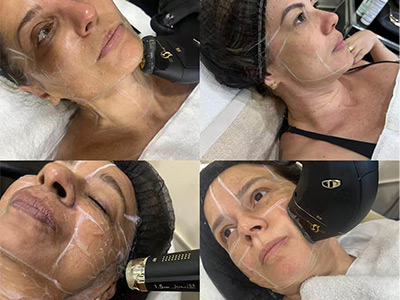
Optimal outcomes depend on careful parameter selection. Energy settings and focal depth must be matched to the patient's tissue characteristics and treatment goals. The clinical endpoint is transient erythema and edema, which may persist for several days. Practitioners should select device-specific cartridges and treatment depths based on the planned treatment lines and the patient's anatomical profile.
Combination approaches have shown enhanced efficacy. A split-face study evaluating HIFU combined with radiofrequency (RF) demonstrated that the combined treatment produced superior skin elasticity improvement compared to HIFU alone, with both treatments on either side of the face exhibiting markedly improved facial lifting compared to baseline after the fourth and eighth weeks. Conclusion
HIFU represents a well-established non-invasive option for facial rejuvenation. Its mechanism of action—controlled thermal coagulation at specific tissue depths—stimulates neocollagenesis and tissue contraction through a physiological wound-healing response. The procedure offers a favorable safety profile and can be customized through transducer selection to address superficial textural concerns, deep dermal laxity, or SMAS-level lifting. While results are more subtle and less durable than those achieved through surgery, HIFU provides a valuable alternative for patients seeking gradual, natural improvement without incisions or extended recovery. As with any energy-based procedure, outcomes depend on appropriate patient selection, proper device settings, and practitioner expertise.



.jpg)