FAQ
Blog&News

Fractional CO2 Laser: The Complete Guide to Principles, Applications, and Clinical Success

2026-07-09
Introduction
Fractional CO2 laser technology has revolutionized modern dermatology and aesthetic medicine. As one of the most effective ablative laser systems available today, it combines precision, safety, and remarkable clinical outcomes across a broad spectrum of skin concerns. From deep wrinkles and acne scars to pigmentation disorders and skin laxity, fractional CO2 lasers have earned their reputation as the gold standard for skin resurfacing and rejuvenation.
The global aesthetic & cosmetic lasers market reached USD 1.07 billion in 2026 and is projected to hit USD 2.16 billion by 2035, growing at a steady 8.1% CAGR. The fractional laser market alone, valued at USD 3.74 billion in 2025, is expected to reach USD 6.90 billion by 2032. This extraordinary growth reflects the increasing demand for non‑invasive aesthetic procedures and the proven efficacy of fractional CO2 technology.
Fractional ablative CO2 lasers have long been considered the gold standard for treating wrinkles, scars, and photodamage, due to their ability to generate thousands of micro-ablative zones and micro-thermal zones of injury. Unlike traditional fully ablative CO2 lasers that remove a continuous sheet of epidermis — producing dramatic results but weeks of crusting and significant scarring risk — fractional technology delivers comparable depth in narrow columns while leaving surrounding tissue intact for rapid healing.

1. Working Principle: How Fractional CO2 Laser Works
1.1 The 10,600 nm Wavelength
The core of fractional CO2 laser technology lies in its 10,600 nm (10.6 µm) wavelength — a far‑infrared beam that is strongly absorbed by water molecules in skin tissue, which constitutes approximately 70% of the dermis. When the laser energy is absorbed, it converts almost entirely to heat, vaporizing targeted tissue with minimal lateral thermal spread.
1.2 Microthermal Treatment Zones (MTZs)
The laser beam is divided into numerous microscopic columns through advanced fractional scanning technology. Each column creates a Microthermal Treatment Zone (MTZ) — a tiny channel of ablated and coagulated tissue. The surrounding skin remains completely intact, serving as a natural reservoir of viable cells that accelerates re‑epithelialization from the sides.
This unique "micro‑injury + normal tissue interval" structure is the key to both effective treatment and rapid recovery. The controlled micro‑trauma triggers the skin's natural wound‑healing cascade, activating fibroblast activity in the dermis and promoting continuous synthesis and remodeling of collagen and elastic fibers. The result is progressive tissue regeneration and visible improvement in skin texture, tone, and firmness.
1.3 Fractional vs. Traditional CO2: A Critical Distinction
Feature Traditional (Fully Ablative) CO2 Fractional CO2 Laser
Beam delivery Continuous sheet Microscopic columns (MTZs)
Epidermal removal Complete Partial, fractionated
Healing reservoir None — re‑epithelializes from edges Untreated tissue between MTZs
Typical downtime 2–4 weeks 5–14 days
Scarring/PIH risk Higher Substantially lower
Compared with traditional lasers, the fractional ablative CO2 laser can effectively improve skin regeneration, with shorter downtime and significantly fewer side effects. Fractionated CO2 laser technology has allowed physicians to resurface patients with a lower rate of complications than nonfractionated ablative lasers.

2. Core Clinical Applications
Fractional CO2 lasers are among the most versatile tools in aesthetic medicine, with well‑documented efficacy across multiple indications.
2.1 Scar Revision — The Gold Standard
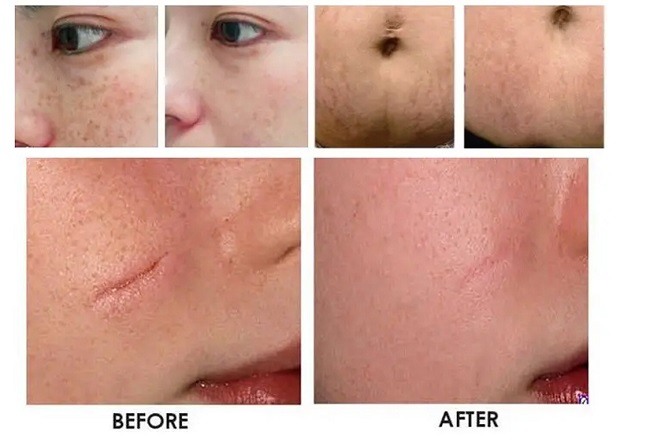
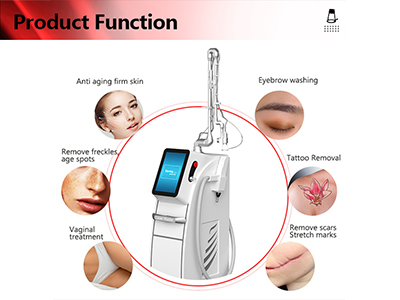
Fractional CO2 laser is the gold standard for treating various skin scars. For atrophic acne scars — including ice‑pick, boxcar, and rolling types — clinical studies demonstrate 25–75% improvement over 2–4 sessions. The laser vaporizes uneven scar tissue, breaks abnormal fiber arrangements, and stimulates normal collagen regeneration, effectively flattening scar texture and restoring smooth skin.
Research shows that combination therapy enhances CO2 laser performance, leading to better ECCA reduction (47.3% vs. 35.9% in standalone treatment). For surgical and burn scars, fractional CO2 laser achieves more significant long‑term results, including improved scar appearance, safety, and patient satisfaction.
2.2 Anti‑Aging and Skin Tightening
By heating the dermal layer, fractional CO2 laser induces thermal contraction of collagen fibers and triggers neocollagenesis — the formation of new collagen. This dual action:
  • Significantly reduces facial fine lines, perioral and periorbital wrinkles
  • Tightens sagging skin on the face, neck, and décolletage
  • Enhances skin elasticity and firmness
  • Delays the visible signs of aging
2.3 Skin Texture and Pore Refinement
The laser precisely vaporizes aging keratinocytes on the skin surface, unclogs blocked hair follicles and sebaceous glands, and improves rough skin texture, dull complexion, and enlarged pores — resulting in smooth, bright, and refined skin.
2.4 Pigmentation Disorders
Fractional CO2 laser can precisely target superficial pigmented lesions, effectively improving melasma, solar lentigines, post‑inflammatory hyperpigmentation (PIH), and actinic keratoses. The technology also repairs damaged skin barriers, helping restore healthy skin function.
2.5 Expanding Indications
Beyond traditional aesthetic applications, fractional CO2 lasers are increasingly used for:
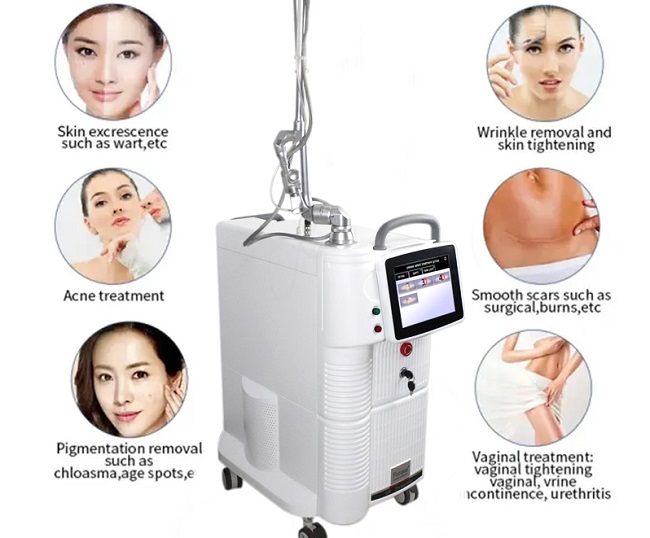
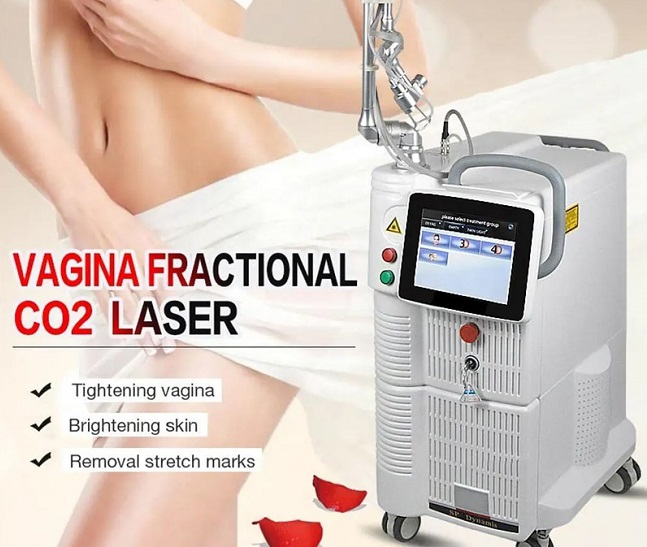
  • Vaginal rejuvenation and genitourinary syndrome of menopause
  • Surgical removal of warts, naevi, skin tags
  • Stretch marks (striae distensae)
  • Alopecia and active acne treatment

3. Clinical Evidence and Market Trends
3.1 Proven Efficacy
Fractional CO2 procedures are an established, safe, and effective armamentarium for managing skin rejuvenation and scarring. Expert consensus recommendations for fractional ablative CO2 laser in facial skin rejuvenation treatment have been published, providing clear clinical guidelines.
The moveo modality — a faster fractional CO2 scanner mode — provides faster treatment and a better final dermal aesthetic outcome than standard procedures while maintaining the same safety profile. Very short‑pulse‑duration devices offer a very high ablated volume/ablated surface ratio, inducing controlled thermal damage with improved safety.
3.2 Market Growth and Opportunity
The laser resurfacing devices market is projected to reach USD 3.28 billion in 2026 and grow at a CAGR of 19.03%, reaching USD 9.42 billion by 2032. Key drivers include:
  • Rising consumer demand for minimally invasive procedures
  • Expanding clinical indications
  • Technological advancements in scanning and energy delivery
  • Growing acceptance of aesthetic treatments across all age groups
3.3 Combination Therapy Trends
Contemporary practice increasingly favors combination approaches:
  • Fractional CO2 + PRP for enhanced scar improvement and accelerated healing
  • Fractional CO2 + RF for synergistic tightening and resurfacing
  • Fractional CO2 + topical therapies for optimized pigment correction

4. Post‑Treatment Care: The Key to Optimal Results
Fractional CO2 laser creates microscopic wounds on the skin surface. Proper post‑treatment care is essential to accelerate recovery, minimize side effects, and ensure the best clinical outcomes.
4.1 Acute Recovery Period (Days 1–7)
  • Days 1–3: Skin appears red and swollen with mild exudation. Do not touch or wash the treatment area for 24 hours to prevent infection. After 24 hours, gently cleanse with sterile saline or mild medical cleansers.
  • Days 4–7: Thin protective scabs form. Do not pick or peel scabs — this can cause secondary damage, infection, and pigmentation. Allow them to fall off naturally.
  • Moisturization: Use medical‑grade dressings and repair ointments to replenish moisture, repair the damaged barrier, and relieve redness.
4.2 Stabilization and Repair Period (Days 7–30)
  • Sun protection is the top priority. Newly regenerated skin is extremely sensitive to UV rays; unprotected exposure directly causes irreversible PIH.
  • Avoid outdoor activities during peak UV hours. Use physical sun protection (hats, masks) and gentle medical‑grade sunscreen once the skin is fully healed.
  • Avoid irritating skincare products containing alcohol, acids, or strong active ingredients.
  • Continue moisturizing and barrier repair to help new skin adapt to the external environment.
4.3 Long‑Term Maintenance (1 Month+)
  • Avoid high‑temperature environments (saunas, hot springs) and strenuous exercise with heavy sweating for one month.
  • Maintain a light diet, avoiding spicy, stimulating, and photosensitive foods.
  • After skin stabilization, maintain daily moisturizing and sun protection habits to prolong results and prevent recurrence.

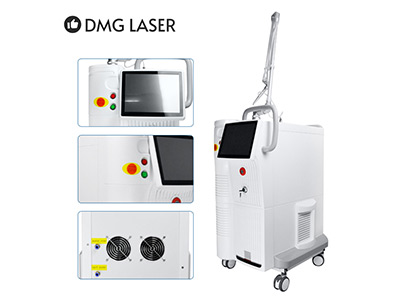
5. Choosing the Right Fractional CO2 Laser Machine
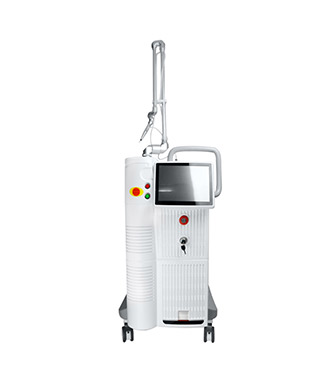
For clinic owners, medspa operators, and distributors, selecting the right fractional CO2 system is a strategic investment decision. Key factors to consider include:
5.1 Core Technical Specifications
Parameter What to Look For
Laser source RF metal tube (15,000–20,000+ hrs lifespan) vs. glass tube (1,500–2,000 hrs)
Power output 30–60 W (40 W is clinical standard)
Pulse width 0.1–10 ms range for maximum flexibility
Spot size <0.12 mm for fine fractional work
Scanning system Galvo‑based with randomized scanning patterns
Cooling Sapphire contact cooling (0°C to +5°C)
5.2 Regulatory Considerations
  • FDA 510(k) clearance (US market) or CE marking (EU market) for specific indications
  • Confirm the device is cleared for the procedures you intend to offer
  • Verify documentation before purchase
5.3 ROI Potential
Professional CO2 fractional laser machines command higher per‑session fees than non‑ablative devices, but their longer‑lasting outcomes frequently yield superior return‑on‑investment for clinics when appropriately marketed and bundled with aftercare services.

6. Conclusion and Next Steps
Fractional CO2 laser technology represents one of the most powerful and versatile tools available to aesthetic practitioners. With proven efficacy across scars, wrinkles, pigmentation, skin laxity, and an expanding range of clinical indications, it offers clinic owners a high‑demand, high‑margin service that builds patient loyalty and drives practice growth.
The technology continues to evolve — with faster scanning modes, improved safety profiles, and combination therapy approaches that enhance outcomes. For distributors, fractional CO2 lasers represent a growing market segment with strong recurring revenue potential and expanding clinical adoption worldwide.

Ready to Add Fractional CO2 Laser to Your Clinic or Product Line?
If you are a clinic owner, medspa operator, dermatologist, or beauty equipment distributor looking to invest in high‑performance fractional CO2 laser technology, we are here to help.
Our fractional CO2 laser systems offer:
✅ RF metal tube technology — 20,000+ hours lifespan, stable energy output
✅ Multiple wavelengths & modes — for scars, wrinkles, pigmentation, and rejuvenation
✅  CE certified — quality assured for professional use
✅ Factory‑direct pricing — competitive wholesale rates for clinics and distributors
✅ OEM/ODM customization — brand your own system
✅ Comprehensive training & support — technical training, treatment protocols, and after‑sales service

Contact us today on Whatsapp: +86 19937136112
Our team is ready to answer your questions, provide product recommendations, and offer a customized quote based on your business needs. Let us help you bring advanced fractional CO2 laser technology to your market.
Related Products
How can we help?
Get in touch with us today for any service. We will reply you within 2 hours