2026 Diode Laser Hair Removal Machine Guide: 10 Systems Worth Considering for Your Clinic
2026-07-29
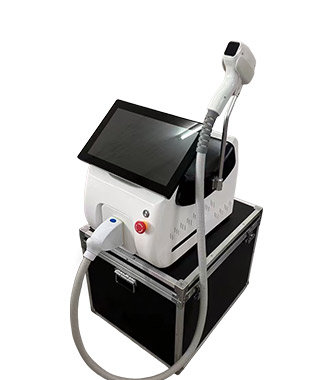
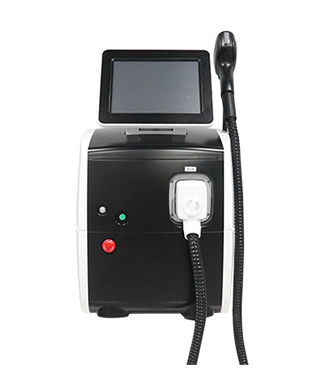
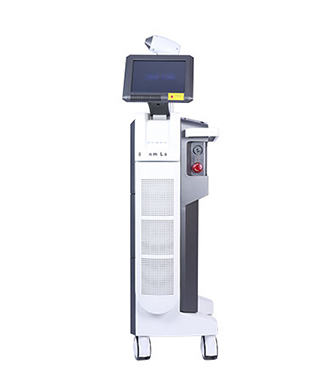
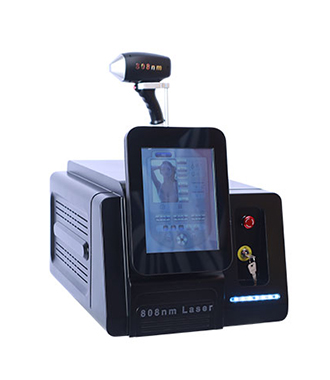
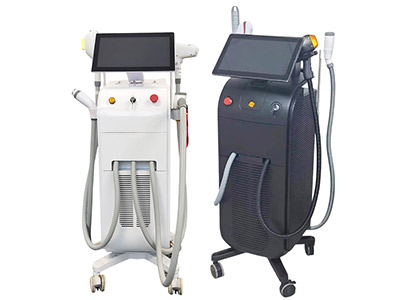
If you're shopping for a diode laser hair removal machine for your clinic, you've probably noticed a pattern: machines look identical in photos, spec sheets read like marketing brochures, and real-world performance often doesn't match the numbers on paper.
This isn't your imagination. The diode category is crowded with systems that appear similar but behave completely differently in a treatment room. This guide won't crown a single "universal winner" — because there isn't one. Instead, it will help you read a diode spec sheet, understand which numbers actually matter, and identify which systems are worth a serious look in 2026.
Quick Answer — Which Diode Laser Hair Removal Machine Is Right for You?
There is no one-size-fits-all answer. The right choice depends on your patient mix, treatment volume, and capital budget. A large dermatology group and a two-room startup should not buy the same device.
Large dermatology centers often choose premium triple-wavelength platforms for skin-type coverage and brand recognition.
High-volume medspas prioritize treatment speed, large spot sizes, and cooling that survives back-to-back sessions.
New clinics and distributors weigh ROI, consumable costs, and service support more than peak wattage numbers.
Triple- and four-wavelength diode systems continue to gain market share because they treat a wider range of skin and hair types than any single 808nm bar. A multi-wavelength diode laser system covering 755nm, 810nm, 940nm, and 1064nm offers the strongest first laser hair removal device for clinics — it treats all six Fitzpatrick skin types safely and effectively.
Understanding Diode Laser Technology: How It Works
Selective Photothermolysis
Diode laser hair removal operates on the principle of selective photothermolysis — precisely targeting melanin in the hair follicle while protecting surrounding tissue. When the laser emits energy at the optimal wavelength, it is preferentially absorbed by pigment in the hair shaft and follicle, converting to heat. The 808nm wavelength effectively penetrates to the follicular bulb (the target tissue), and with appropriate pulse duration, generates sufficient thermal damage to the target while leaving surrounding tissue unaffected.
Hair growth is cyclic, and only anagen (active growth phase) follicles are fully sensitive to laser treatment. At any given time, only 15-20% of hairs are in this phase — which is why a series of treatments is required to catch each hair during its susceptible window.
Why 808nm Became the Industry Standard
Efficient melanin absorption — strong absorption within melanin's effective targeting range
Ideal penetration depth — reaches the follicular bulb/bulge while minimizing surface scattering
Broader skin-type tolerance — the longer wavelength bypasses much of the epidermal melanin compared to Alexandrite
Proven ROI — mature, serviceable technology with predictable consumable costs
Single, Triple, and Four-Wavelength Systems Explained
Single-Wavelength 808nm Systems
One wavelength, one job, reliable. These platforms have the longest clinical track record and the lowest acquisition cost. The trade-off? Limited flexibility. An 808nm bar works perfectly for coarse dark hair on light-to-medium skin, but performs less effectively on very fine hair and requires cautious settings on darker skin tones.
Triple-Wavelength Systems (755 + 808 + 1064nm)
Add 755nm for fine, light hair and fair skin. Add 1064nm for deeper penetration and safer treatment of Fitzpatrick IV-VI skin types, as it interacts less with epidermal melanin. Blended emitters allow one handpiece to cover the majority of patients who walk through the door — which is why triple-wavelength diodes dominate the premium segment.
Four-Wavelength Systems (755 + 808 + 940 + 1064nm)
Four wavelengths add 940nm for an additional absorption profile and maximum customization. The trade-off is higher cost and increased operator complexity. These systems are best suited for high-volume clinics where the machine runs enough to justify the investment.
10 Systems Worth Considering — Ranked by Clinical Fit
The following rankings are based on weighted criteria relevant to the average independent clinic. Scores reflect clinical performance, real cost, service depth, and operational fit — not just marketing claims.
01. Alma Soprano ICE Platinum | Score 86/100
Alma blends 755, 810, and 1064nm into a single emitter, paired with SHR "in-motion" delivery and ICE contact cooling. The result is one of the most comfortable treatments in the category, with genuine coverage across Fitzpatrick I-VI. Patients request it by name — which supports premium pricing.
Best for: Premium medspas and multi-room centers that can monetize comfort and brand recognition
Considerations: High acquisition and service cost; SHR technique has a learning curve; lower-volume clinics will struggle to recoup the premium
02. Primelase HR | Score 84/100
A high-power four-wavelength diode (755, 808, 940, 1064nm) built for speed. Approximately 4,800W peak output and large spot sizes clear big areas fast. Sapphire contact cooling keeps the surface protected at high fluence.
Best for: High-volume laser centers and chains with steady throughput
Strengths: Very fast on large areas; broad wavelength range; strong results across hair types including tanned skin
Considerations: High purchase price; requires an experienced operator; capital only pays back with real volume
03. Lumenis LightSheer Quattro | Score 82/100
Lumenis pairs 805 and 1060nm with two delivery options: a vacuum-assisted handpiece that stretches and flattens skin for gel-free treatment, and a sapphire ChillTip handpiece. The clinical record is long and results are consistent — which is why dermatology practices trust it.
Best for: Dermatology practices that value clinical track record and service
Strengths: Reliable, well-documented outcomes; gel-free vacuum handpiece; strong global service network
Considerations: Premium pricing; dual-wavelength only, so less range than triple-wavelength platforms
04. Asclepion MeDioStar | Score 81/100
A German-engineered 810nm diode (940 and 1064nm configurable) built around throughput. High output, a dual-handpiece system, and a 20Hz repetition rate make it one of the fastest single-platform diodes for busy clinics. Internal water cooling holds output stable across long days.
Best for: Clinics needing maximum speed and high daily patient counts
Strengths: Excellent speed and throughput; stable output under load; strong cooling; refined interface
Considerations: Base configuration is single-wavelength; less skin-type range than blended systems unless upgraded
05. Candela GentleMax Pro Plus | Score 80/100
Not a diode platform, but frequently cross-shopped against diodes. Candela pairs 755nm Alexandrite with 1064nm Nd:YAG, backed by decades of dermatology data and cryogen Dynamic Cooling Device. It also treats vascular and pigmented lesions.
Best for: Large dermatology groups wanting one trusted multi-indication platform
Strengths: Industry-standard reliability; decades of validation; multi-indication versatility; strong North American service
06. LEFIS K12 Diode Laser Series | Score 78/100
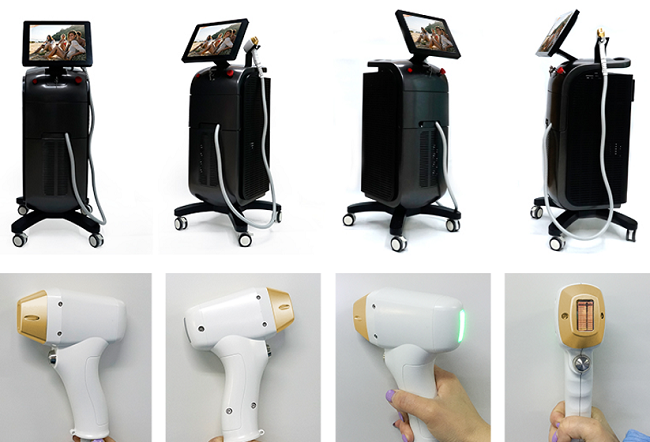
The LEFIS K12 is built on a high-power diode bar with double contact cooling, 1,600W output, handpiece recognition, and a rated 30 million shot bar life. The 808nm core is available with multi-wavelength configurations. Where we compete is on delivered capability per dollar — roughly the clinical work of a tier-one diode at a fraction of the capital.
Best for: Independent clinics and growing medspas in Latin America, Southeast Asia, the Middle East, and Eastern Europe; plus distributors and OEM partners building private-label brands
Strengths: Strong value against platform capability; double contact cooling and 1,600W; long rated bar life; established OEM/ODM program; service across emerging markets
Considerations: Lower global brand recognition than legacy manufacturers; comfort and peak speed trail the premium tier
07-10. Other Systems Worth Noting
Cutera Excel HR (Score 77/100) — US dual-wavelength system (755nm Alexandrite + 1064nm Nd:YAG) with electrically adjustable spot size and sapphire cooling. Good for clinics wanting hair removal plus vascular treatments from one device.
Lutronic Clarity II (Score 76/100) — 755/1064nm platform with IntelliTrak energy delivery and gel-free cryogen cooling. Strong on fine light hair and darker skin tones, plus pigmentation services.
Quanta Light EVO (Score 75/100) — Modular Alexandrite/Nd:YAG platform with up to four wavelengths and IPL options. For clinics wanting one chassis to cover hair, vascular, pigment, and resurfacing.
Deka Again Pro (Score 74/100) — Italian 755/1064nm system with MOVEO sliding technique and 12 spot sizes on the standard handpiece. Comfortable, fast on large areas, popular in European clinics.
Diode Laser vs IPL: Key Distinctions
A diode laser fires a single, focused wavelength directly at follicular melanin. IPL fires a broad band of light (approximately 500-1200nm), scattering energy across multiple targets — less of it reaches the follicle. For hair removal, focused beats broad. For clinics prioritizing high-performance hair removal, diode laser systems remain the preferred choice, while IPL offers greater versatility for multi-treatment applications.
Pre-Purchase Checklist
Before placing an order, work through these checks in order:
Check wavelength options. Single 808nm for coarse dark hair on lighter skin; add 1064nm if you treat Fitzpatrick IV-VI; add 755nm for fine light hair.
Evaluate cooling. Ask whether cooling maintains skin temperature under continuous load — not just for one pulse. Weak cooling is the most common cause of burns.
Compare spot sizes. Larger spots cover big areas faster; smaller spots handle face and bikini line.
Review peak power. Higher power enables larger spots and faster work, but only matters if cooling and operator skill keep pace.
Verify certifications. Confirm FDA 510(k) clearance (not just listing), plus CE Mark and ISO 13485. Ask for the actual certificate.
Assess manufacturer support. Parts lead time, warranty terms, and operator training determine your next five years. Ask for an engineering call before signing.
Calculate ROI. Model machine cost against session price, daily throughput, consumables, and maintenance. A cheaper machine with high downtime is the expensive one.
Spec-sheet test. Ask for measured power and cooling specifications on the data sheet — not marketing brochure numbers.
Conclusion
Diode laser hair removal remains one of the most reliable and profitable services in aesthetics in 2026. Multi-wavelength systems continue to gain market share because they treat more skin and hair types from a single handpiece.
Premium platforms from Alma, Primelase, and Lumenis lead on comfort, speed, and brand pull — and they earn their price in the right clinic. Value-oriented platforms offer solid clinical capability, real service depth, and flexible OEM options for partners building their own brand.
Before you buy, compare wavelength range, cooling under load, service support, genuine certifications, and long-term ROI — not just the biggest wattage number on the page. The best machine is the one your team can run safely, profitably, and consistently on the patients walking through your door.

.jpg)


.jpg)
.jpg)