Tattoo Removal for Dark Skin: A Comprehensive Clinical Guide for Aesthetic Practitioners
2026-07-24
Introduction
For years, patients with darker skin tones (Fitzpatrick skin types IV–VI) have faced a frustrating reality: tattoo removal was either unsafe, ineffective, or both. The melanin-rich epidermis that gives dark skin its beautiful complexion also competes with tattoo ink for laser energy, creating a significant risk of burns, hyperpigmentation, and scarring. Traditional Q-switched lasers—particularly ruby (694 nm) and alexandrite (755 nm)—were often contraindicated for darker skin types due to their high melanin absorption.
However, the landscape has changed dramatically. The emergence of Nd:YAG technology—and more recently, picosecond Nd:YAG lasers—has opened up safe, effective tattoo removal for patients of all skin types, including those with Fitzpatrick IV–VI skin phototypes.
This guide provides a comprehensive overview of tattoo removal for dark skin, covering the science, best practices, and why picosecond technology represents the future of safe tattoo removal for all skin tones.
Understanding the Challenge: Why Dark Skin Requires Special Consideration
The Fitzpatrick Scale and Laser-Tissue Interaction
The Fitzpatrick scale classifies skin by its response to UV exposure. Types IV–VI are characterized by higher melanin content in the epidermis. When a laser pulse hits the skin, the energy is absorbed by melanin as well as tattoo ink. With shorter wavelengths (694 nm, 755 nm), this competition is fierce—melanin in the epidermis absorbs so much energy that it risks thermal damage, leading to burns, blistering, or permanent pigment changes.
The 1064 nm Nd:YAG wavelength penetrates deeper into the dermis and is significantly less absorbed by epidermal melanin. This makes it the gold standard—and often the only safe option—for tattoo removal in Fitzpatrick IV–VI skin types.
The Risks of Improper Treatment
When tattoo removal is performed on dark skin with inappropriate laser settings or wavelengths, several complications can arise:
Hyperpigmentation: The treated area becomes darker than the surrounding skin due to melanocyte stimulation from thermal injury.
Hypopigmentation: Permanent loss of pigment, leaving white or lighter spots.
Scarring and textural changes: Keloid formation is a particular risk in darker skin types.
Paradoxical darkening: Some inks, particularly certain cosmetic pigments, can actually darken when exposed to laser energy.
These risks are why choosing the right laser technology and an experienced practitioner is non-negotiable when treating darker skin.
Nd:YAG Nanosecond vs. Picosecond: A Critical Comparison Traditional Q-Switched Nd:YAG Nanosecond Lasers
Q-switched Nd:YAG nanosecond lasers (pulse widths of 5–17 ns) have long been the workhorse for tattoo removal in darker skin. The 1064 nm wavelength safely bypasses epidermal melanin and effectively shatters black, blue, and dark green ink particles.
However, nanosecond lasers rely primarily on photothermal (heat-based) energy to break down ink. This heat can still cause collateral thermal damage to surrounding tissue, increasing the risk of pigmentary changes in melanin-rich skin. Picosecond Nd:YAG: The Next Generation
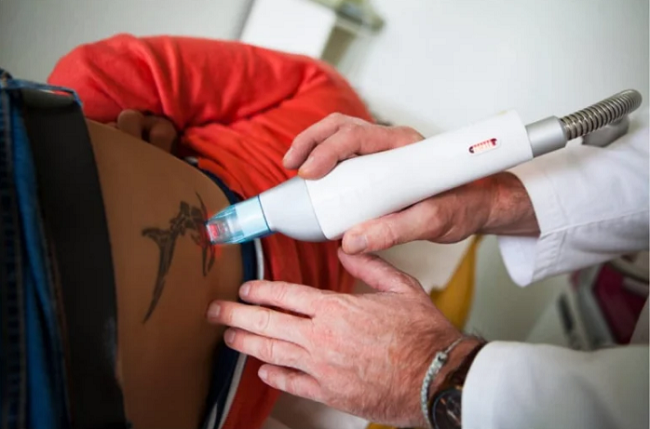
Picosecond Nd:YAG lasers—with pulse widths of 300–450 picoseconds (a picosecond is one trillionth of a second)—represent a paradigm shift. The ultra-short pulse duration creates a photoacoustic (pressure-based) shockwave rather than relying primarily on heat. This difference is critical for dark skin:
Less Thermal Damage: The photoacoustic effect shatters ink into even smaller particles with significantly less heat transfer to surrounding tissue.
Fewer Sessions: Studies have demonstrated that picosecond Nd:YAG lasers achieve excellent to moderate responses in as few as two sessions for professional black tattoos in Fitzpatrick type IV skin.
Lower Complication Rates: By minimizing thermal injury, picosecond technology substantially reduces the risk of post-inflammatory hyperpigmentation and scarring.
Broader Ink Color Capability: With dual wavelengths (532 nm and 1064 nm), picosecond Nd:YAG systems can address a wider range of ink colors, including reds and oranges, while maintaining safety for darker skin.
Published Clinical Evidence
A 2024 prospective study published in Lasers in Medical Science evaluated picosecond Q-switched Nd:YAG laser treatment for black tattoos in Middle Eastern patients (predominantly Fitzpatrick type IV). The study concluded that picosecond Nd:YAG laser was an effective and safe technique, with most patients achieving excellent to moderate responses after only two sessions.
PubMed-indexed case reports have also documented successful treatment of red and black professional tattoos in Fitzpatrick type VI skin using picosecond dual-wavelength Nd:YAG lasers, demonstrating that even the darkest skin types can achieve excellent results with the right technology and protocols.
Best Practices for Safe Tattoo Removal on Dark Skin 1. Choose the Right Wavelength
The 1064 nm Nd:YAG wavelength is mandatory as a first-line treatment for Fitzpatrick IV–VI . Shorter wavelengths such as 694 nm (ruby) and 755 nm (alexandrite) should be avoided due to their higher melanin absorption and increased risk of pigmentary complications. 2. Lower Energy Settings
Start with conservative energy settings. Test patches are essential—apply the laser to a small, inconspicuous area of the tattoo and observe the skin's response over several weeks before proceeding with full treatment. This allows you to gauge the patient's individual reaction and adjust parameters accordingly. 3. Longer Intervals Between Sessions
Allow 8–12 weeks between treatments. Darker skin requires more time for complete healing and for the immune system to clear fragmented ink particles. Rushing sessions increases the risk of scarring and pigment changes. 4. Minimize Sun Exposure
Instruct patients to avoid sun exposure for at least 4 weeks before and after each treatment. Sun exposure increases melanin activity in the skin, making it more susceptible to laser-induced pigment changes. 5. Strict Sun Protection
Patients should apply broad-spectrum SPF 50+ sunscreen to the treated area daily for at least 3 months post-treatment, even if the area is covered by clothing. 6. Work with an Experienced Practitioner
Seek out practitioners who have specific experience treating skin of color. Dark skin requires nuanced judgment in parameter selection and a deep understanding of the risks involved.
Why Choose Our Picosecond Nd:YAG Laser System?
At Mico Aes, we are committed to providing aesthetic professionals with the tools they need to deliver safe, effective, and profitable treatments for every patient—regardless of skin type.
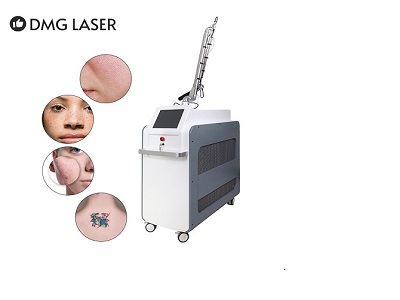
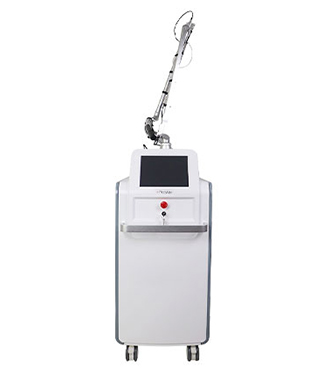
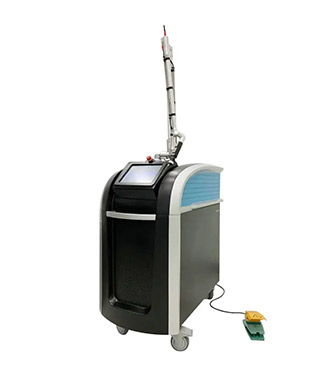
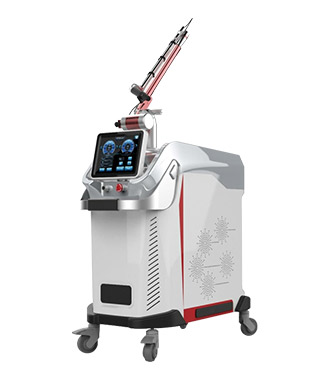
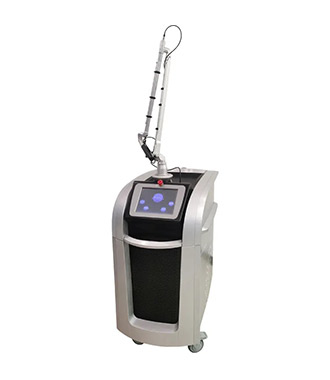
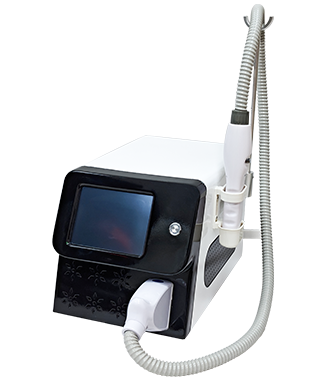
Our picosecond Nd:YAG laser system offers:
Dual Wavelengths (532 nm & 1064 nm) – The 1064 nm wavelength is FDA-cleared for tattoo removal on all skin types, including Fitzpatrick I–VI. This ensures you can safely treat the darkest skin tones without compromising efficacy.
Ultra-Short Pulse Duration (450 ps) – Our picosecond technology delivers maximum photoacoustic effect with minimal thermal damage, reducing the risk of hyperpigmentation and scarring in melanin-rich skin.
Proven Clinical Efficacy – Clinical studies confirm that picosecond Nd:YAG lasers achieve excellent results in as few as two sessions for dark skin types.
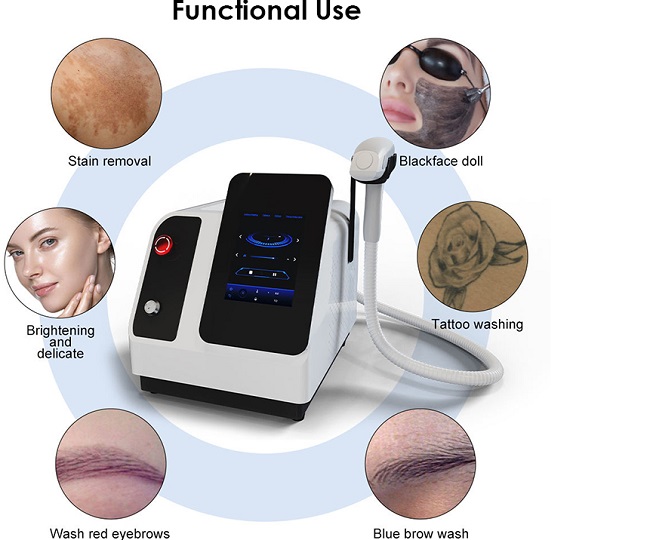
Versatile Applications – Beyond tattoo removal, our system effectively treats benign pigmented lesions and cosmetic tattoo blow-out, making it a versatile addition to any aesthetic practice.
CE Certified & Factory Direct Pricing – Quality assured with competitive B2B wholesale pricing for clinics and distributors.
Comprehensive Training & Support – We provide full technical training, treatment protocols, and after-sales support to ensure your team delivers consistent, safe results.
Conclusion
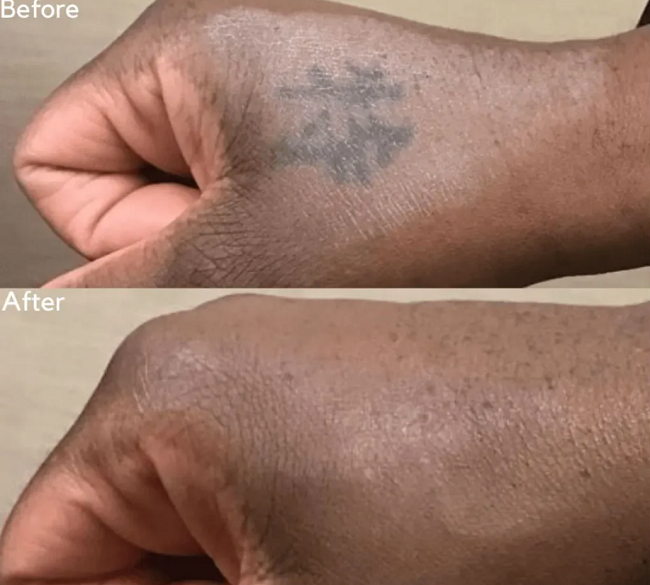
Tattoo removal for dark skin is no longer a high-risk procedure to be avoided. With the right technology—specifically, a picosecond Nd:YAG laser operating at 1064 nm—practitioners can achieve excellent clearance rates with minimal side effects, even in Fitzpatrick IV–VI skin types.
The evidence is clear: picosecond Nd:YAG laser is safe and effective for tattoo removal in darker skin, with fewer sessions and superior outcomes compared to traditional nanosecond lasers.
Ready to Elevate Your Tattoo Removal Services?
If you are a clinic owner, medspa operator, dermatologist, or beauty equipment distributor looking to invest in a picosecond Nd:YAG laser system that delivers safe, effective results for all skin types, we are here to help.
Contact us today on Whatsapp: +86 19937136112
Our team is ready to answer your questions, provide product recommendations, and offer a customized quote based on your business needs. Let us help you bring advanced picosecond tattoo removal technology to your market.