The Cryolipolysis Machine You Buy Today Will Either Make You Money or Cost You Clients – Here‘s How to Tell the Difference
2026-07-22
The Physics of Fat Freezing: Why Most Machines Get It Wrong
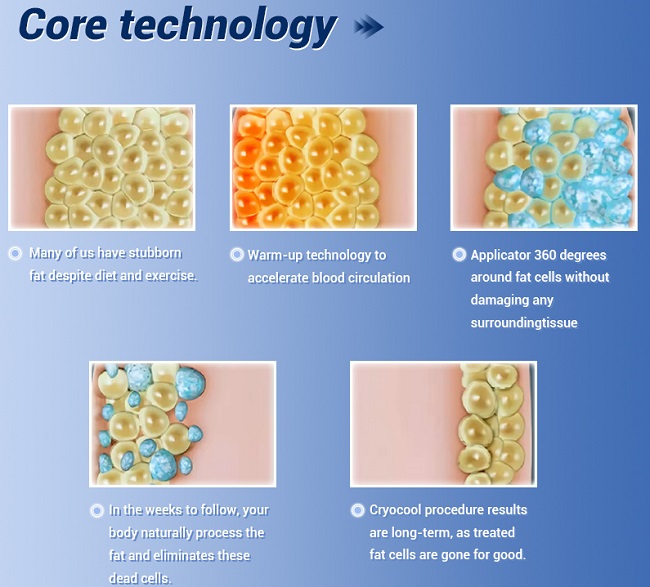
Cryolipolysis is built on a simple premise: fat cells crystallize at higher temperatures than water-containing cells. At approximately 4°C, adipocytes begin to form ice crystals that trigger apoptosis—a programmed cell death that the body then clears through natural metabolic processes over 8–12 weeks.
Simple premise. But the engineering required to achieve it safely and consistently is anything but simple.
Here’s the problem:
The subcutaneous fat layer is not a uniform slab of tissue. It varies in thickness, density, and vascularity across different body areas and between individual clients. The skin surface, where the cooling applicator makes contact, is a poor thermal conductor compared to fat. And the body constantly works to maintain core temperature through vasoconstriction and shivering responses.
To achieve effective fat crystallization without damaging the epidermis, you need three things:
Precise temperature control at the treatment interface
Uniform cooling distribution across the entire contact area
Active heat extraction that outpaces the body’s thermal compensation mechanisms
These are not optional features. They are fundamental physical requirements.
What Most Machine Specifications Don’t Tell You
When you read a supplier’s spec sheet, you’ll see impressive numbers: low temperatures, high vacuum pressures, short treatment times.
What they don’t tell you is how those numbers are achieved—and whether they can be sustained.
The Cooling System: Where the Real Engineering Lives
The cooling system of a cryolipolysis machine is not just a compressor and a copper coil. It’s a thermodynamic system that must maintain a stable negative temperature gradient across the treatment head, second by second, for the entire duration of the session.
The physics of this is demanding:
Heat flux: The cooling head must extract approximately 50–80 watts of thermal energy per square centimeter of contact area. That’s equivalent to the heat output of a small incandescent light bulb, constantly, through a contact interface that’s only a few millimeters thick.
Temperature stability: Clinical studies demonstrate that effective adipocyte apoptosis requires tissue temperature to be maintained within ±1.5°C of the therapeutic target (−10°C to −11°C) for at least 60% of the treatment duration. Any deviation beyond ±2°C reduces apoptosis efficiency by up to 30%.
Recovery time: Between sessions, the cooling system must return to baseline operating temperature within 10–15 minutes to maintain clinic throughput. Many budget machines require 25–30 minutes of cooldown, effectively reducing your daily client capacity by 30–40%.
Most budget machines fail on all three counts. They use undersized compressors that can’t maintain thermal equilibrium. They lack real‑time temperature feedback loops. Their cooling blocks have uneven thermal distribution, creating hot spots that under‑treat and cold spots that risk tissue damage.
The Hidden Engineering Failure: Thermocouple Placement
Here’s a detail that separates professional-grade equipment from consumer-grade imitations:
Thermocouple placement.
Thermocouples are the temperature sensors that feed data to the machine’s control system. In high‑quality machines, multiple thermocouples are embedded directly into the applicator’s contact surface—the part that actually touches the client’s skin.
In budget machines, the thermocouples are placed in the cooling block itself, several millimeters behind the contact surface. The machine reads one temperature, but the treatment head delivers another. This thermal lag means the machine is essentially guessing what temperature the client’s tissue is actually experiencing.
The clinical consequence: During the first 5–10 minutes of treatment, budget machines are operating blind. By the time the control system “realizes” the target temperature has been reached, the actual tissue temperature may be 3–4°C higher or lower than therapeutic range. That’s the difference between effective fat reduction and tissue injury—or no result at all.
Medical-Grade Silicone vs. Hard Plastic: The Thermal Conductivity Difference
The applicator material isn’t just a comfort issue—it’s a thermal conductivity issue.
Hard plastic has a thermal conductivity of approximately 0.2–0.3 W/m·K (watts per meter per Kelvin). Medical-grade silicone typically ranges from 0.5–0.7 W/m·K. This means silicone transfers cold energy to the skin up to twice as efficiently as hard plastic.
Why does this matter?
Because treatment speed and fat reduction efficacy are directly influenced by how efficiently cold energy moves from the cooling element into the tissue. A more thermally conductive material means:
Shorter treatment times for the same clinical effect
Lower vacuum pressure required to maintain contact (reducing bruising)
More uniform temperature distribution across the treatment area
This is also why soft silicone applicators reduce bruising—not just because they conform to the body’s curves, but because they can achieve effective tissue cooling at lower vacuum pressures, reducing mechanical stress on capillaries and dermal structures.
Many clinics report 50% less bruising after switching to silicone applicators compared to hard plastic—with no change in treatment protocol.
That’s not marketing. That’s simple thermal physics.
Dual-Handle vs. Single-Handle: The Heat Management Factor
Most discussions about dual-handle machines focus on efficiency—shorter treatment times, more clients per day.
But there’s another factor that’s rarely discussed: thermal load management.
Running two applicators simultaneously doubles the heat extraction load on the cooling system. A machine with an undersized compressor or inadequate heat dissipation will struggle to maintain target temperatures across both heads. The result is inconsistent cooling—one applicator runs colder than the other, or both drift off target.
A well-engineered dual-handle system has:
A compressor with at least 30–40% higher cooling capacity than the system’s maximum draw
Independent temperature feedback loops for each applicator
A thermal dissipation system (radiator and fan) sized for 100% duty cycle operation
The test: Run both applicators simultaneously for 30 minutes. Monitor the actual contact temperatures. If they drift by more than ±1.5°C from set point, the system is under‑engineered for dual‑handle operation.
What Professional-Grade Engineering Actually Looks Like
When you compare a professionally engineered cryolipolysis machine with a budget alternative, the differences are in the details that don’t appear on the spec sheet:
Power supply: Professional units use medical‑grade isolated power supplies with surge protection and EMI filtering. Budget units use consumer‑grade power supplies that are more likely to fail under heavy clinic use.
Fluid lines: The cooling fluid circulation system in a professional machine uses reinforced, food‑grade silicone tubing with quick‑disconnect fittings that can withstand thousands of connection cycles without leaking. Budget machines use cheap PVC tubing that becomes brittle and cracks within 12–18 months.
Vacuum pump: The vacuum system that holds the applicator against the skin must maintain consistent negative pressure throughout the treatment. Professional machines use oil‑sealed rotary vane pumps designed for continuous duty. Budget machines use diaphragm pumps that lose pressure as they heat up, resulting in the applicator losing contact mid‑treatment.
Noise and vibration: Professional machines are designed with vibration dampening mounts and acoustic insulation, reducing operating noise to 55–60 dB. Budget machines often exceed 75–80 dB—loud enough to disturb both clients and staff throughout the day.
Why This Matters for Your Clinic
The physics of cryolipolysis is not negotiable. Fat cells don’t care about your budget. They respond to temperature, and they respond only within a narrow therapeutic window.
If your machine can’t deliver that window consistently—session after session, client after client—your results will be inconsistent. Inconsistent results erode client trust. Eroded trust destroys your reputation. And a destroyed reputation is far more expensive than the cost difference between a professional-grade machine and a budget imitation.
The choice isn’t really about price. It’s about understanding physics and engineering well enough to avoid buying a product that can’t physically deliver the results your clients are paying for.
What Our 360° Cryolipolysis Systems Deliver
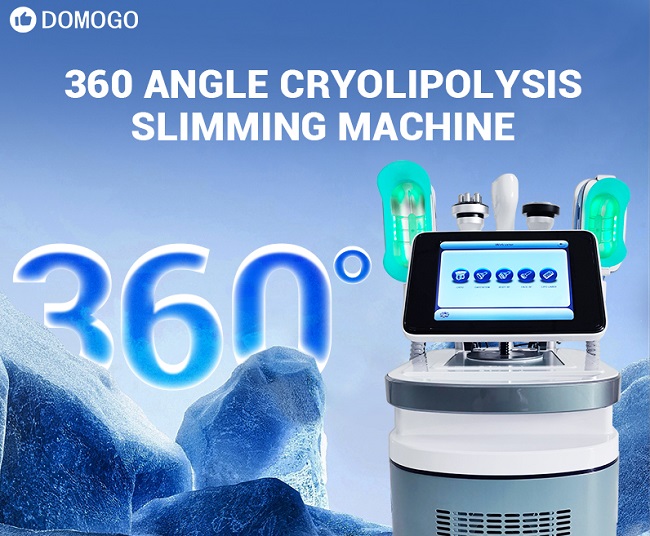
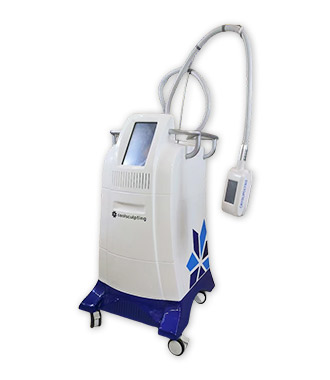
Our Portable 360 cryolipolysis Machine are built by a factory with 15+ years of experience in medical-aesthetic equipment. Not a trading company. Not a middleman. A real manufacturer with real quality control.
What you get:
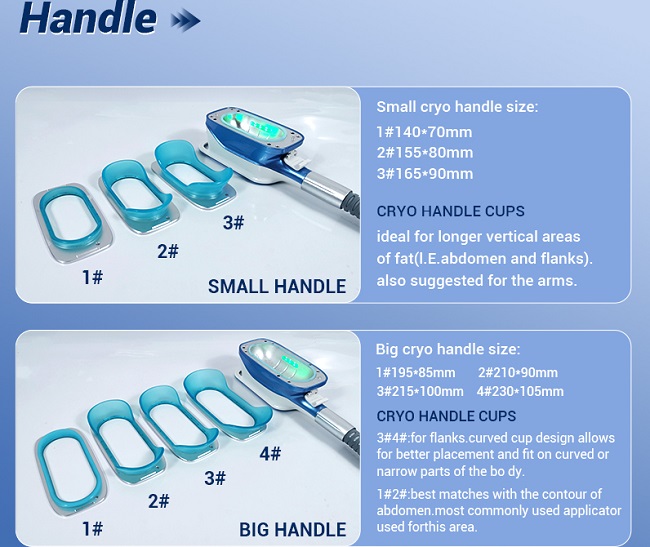
✅ Medical-grade soft silicone applicators – Superior thermal conductivity, lower bruising, better client comfort.
✅ Multiple thermocouples embedded in the applicator contact surface – Not in the cooling block. Real-time tissue temperature monitoring, not thermal lag.
✅ Independently controlled dual-handle operation – Each applicator has its own temperature feedback loop. No thermal drift.
✅ Oil-sealed rotary vane vacuum pump – Consistent negative pressure, session after session.
✅ Reinforced, food-grade silicone fluid lines with quick-disconnect fittings – Leak-proof, durable, easy to maintain.
✅ Medical-grade isolated power supply – Surge protection, EMI filtering, designed for continuous clinical use.
✅ CE & ISO 13485 certified – Required for professional clinic use worldwide.
✅ 1-year warranty + lifetime remote support – We don’t disappear after the sale. Whatsapp: +86 19937136112
We can show you live, real-time video of our factory. We can provide client references. We can answer the hard questions that most suppliers will dodge.
One Last Truth
The cheapest machine isn’t the most expensive machine either.
It’s the one that leaves you with unhappy clients, a ruined reputation, and a thousand excuses from a supplier who’s already moved on to the next customer.
Choose carefully. Your reputation depends on it.



.jpg)
.jpg)
.jpg)
.jpg)
.jpg)
.jpg)


